Mew Star Delta Species
Quick take
- The only Gold Star Mew ever printed
- Number 101 of 101, the top chase slot of Dragon Frontiers
- Shiny blue coloring instead of Mew's standard pink
- Delta Species reworks Mew as a Water type
Collector's readWhat it means for your master set
Set landscapeWhere this card sits in EX Dragon Frontiers
VariantsCard variants
Holofoil 101/101 · $3500.00 — the only variant this card was printed in (no reverse holo or special pattern), so a master set needs just this one copy.
The storyThe blue Mew everyone chases
Mew Star is the marquee Gold Star of EX Dragon Frontiers, card 101 out of 101. It sits at the top of the set next to Charizard Star, and for a lot of collectors it is the more beloved of the two. Mew is one of the most iconic Pokemon ever printed, and this is its only Gold Star.
“The only Gold Star Mew ever printed”
The Gold Star line ran from 2004 to 2007 and only ever covered a small group of Pokemon. Each one shows the shiny, alternate-color version of the Pokemon, so this Mew is rendered in baby blue instead of its usual pink. That swap is the whole appeal. A blue Mew is rare in any form, and pinning it to a Gold Star frame made it an instant grail.
Because Dragon Frontiers was a Delta Species set, Mew here is a Water type rather than Psychic. That is part of why the art leans into cool blues against a warm red and white background. It reads clean and instantly recognizable across a binder page.
By the numbersMarket analysis
Mew Star sits at the top of the Dragon Frontiers set. Raw copies trade in strong three-to-four-figure territory, and high grades push well into four figures. It tracks closely with the set's Charizard Gold Star as the two halves of the chase pair.
Vintage Gold Stars have trended up over the long run as the 2004 to 2007 era settled in as one of the most collected vintage stretches after the Base era. Mew benefits from being a top-tier mascot, so demand stays firm even when the broader market cools.
This is a blue-chip vintage card with a finite supply and a Pokemon that never falls out of favor. Condition is everything at this level. Centering and surface decide whether a copy lands in the lower or upper range, so the gap between grades is wide.
Graded copies command a large premium over raw, and the jump from a mid grade to a gem grade is steep given how hard the foil and centering are to keep clean. Most serious money changes hands in PSA, BGS, or CGC slabs.
Gold Stars from the EX era were brutal pulls. Across the 2004 to 2007 sets they landed at roughly one per two booster boxes, somewhere around 1 in 72 packs, and that is for any Gold Star in the set, not this specific Mew. With Charizard Star also in Dragon Frontiers, your odds of opening this exact card from sealed product were long even back in 2006. Most copies that change hands today come from the secondary market rather than fresh packs.
That pull rate is far steeper than anything in modern Scarlet and Violet sets, where any Special Illustration Rare runs about 1 in 90 packs and Hyper Rares fall in the 1 in 300 to 700 range. Odds for one specific modern card run much longer, often into the hundreds of packs. The bigger difference is supply: those modern chases sit in active print runs, while Gold Stars are a closed vintage category with no new supply coming.
ArtworkWhy the art matters

Masakazu Fukuda is one of the defining illustrators of the Gold Star era. He painted several of the most sought-after Gold Stars of the 2004 to 2007 run, and his name on a vintage card is a draw in its own right for collectors who follow artists.
A shiny Mew floats in the center of the card, painted in soft baby blue rather than its usual pink. The background is a warm rush of red and white motion blur, so the cool blue Mew pops hard against it. The composition is simple and centered, which is part of why the card reads so cleanly.
The card uses the Gold Star holo treatment, with the signature gold star printed next to the Pokemon's name and a star-patterned holofoil. As a Delta Species card it is a Water type, which ties into the cool color palette. It is a Basic Pokemon with 70 HP and carries the Mimicry and Rainbow Wave attacks.
The alternate-color shiny Mew is the hook. You almost never see Mew in blue, and the Gold Star frame turns a familiar Pokemon into something that feels genuinely rare on the page.
BackgroundAbout Mew Star Delta Species
Mew is the original mythical Pokemon, number 151, famous since the first generation as the secret Pokemon hidden behind Mewtwo. It has carried a special status in the franchise for decades, which feeds straight into the demand for any premium Mew card.
- ›Mythical status as the original 151 secret Pokemon
- ›Long history of being a rare, event-only or chase Pokemon
- ›Universally recognized design that appeals beyond hardcore TCG fans
- ›This card being its sole Gold Star printing
- ›Headlining mythical of the first Pokemon generation
- ›Frequent star of premium and chase TCG cards across many eras
Own it wellCollector guide
Centering and holo surface are the usual problem areas on Gold Stars. The star-pattern foil shows whitening on the edges and corners easily, and back-surface scratches are common on cards this old. Inspect the front holo under angled light for scuffs before committing.
At this value level, buy graded or grade anything you pull. PSA, BGS, and CGC slabs carry the most weight in the market. Authenticate raw copies carefully given how often this card is faked. Read the grading guide →
Keep raw copies in a penny sleeve inside a sealed semi-rigid holder, out of direct light and away from humidity swings. For anything you are not actively grading, a sealed top loader in a dark, climate-stable spot is the safe default. Store graded slabs upright and protected from pressure. See the storage guide →
This is one of the most counterfeited vintage cards out there, so authentication matters more than price. Run the light test first: holding a genuine card up to a bright light reveals the dark black core layer sandwiched inside, while fakes often glow through or lack that core. Feel the surface texture, since real Gold Stars have a distinct linen-like front that reprints miss. Watch how the holo behaves as you tilt it, the star pattern should animate smoothly rather than look flat or pixelated. Check the back swirl, where the blue Pokemon back has a soft gradient that fakes render too sharp or off-color. For any serious money, buy it already graded from a reputable slab. See the singles buying guide →
Light test for the black core layer, linen surface texture on the front, smooth animated star holo when tilted, and a correct soft gradient on the back swirl. When in doubt, only buy graded copies from PSA, BGS, or CGC.
Protect your card
High Chase Score — protect and consider grading. · Amazon affiliate links · Storage guideWord on the streetCommunity sentiment
Mew Star is treated as a genuine grail in the vintage community. Collectors chasing the full Gold Star run consider it a centerpiece, and plenty of Mew-focused collectors target it as the single card they most want.
- ›High-grade PSA examples regularly clear strong four-figure results at auction
The blue Mew art is a recurring favorite in vintage showcase posts, and it routinely comes up in conversations about the best-looking Gold Stars and the most desirable Mew cards ever made.
Good to knowFrequently asked questions
Keep collectingRelated cards


Plan your Other EX Dragon Frontiers master set
Track every card, see what you're missing, and lay out your binder page by page.
More cards in Other EX Dragon Frontiers
See all 101 cards → Scramble Energy89/101
 Altaria ex Delta Species90/101
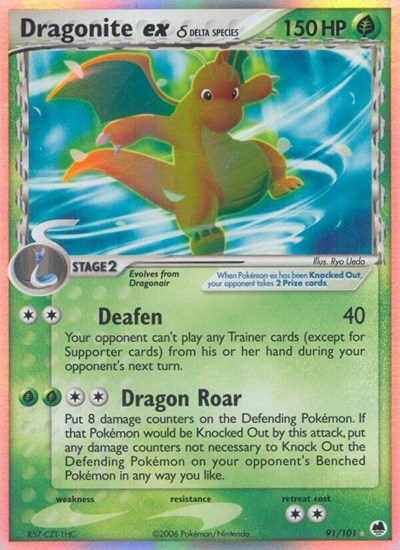 Dragonite ex Delta Species91/101
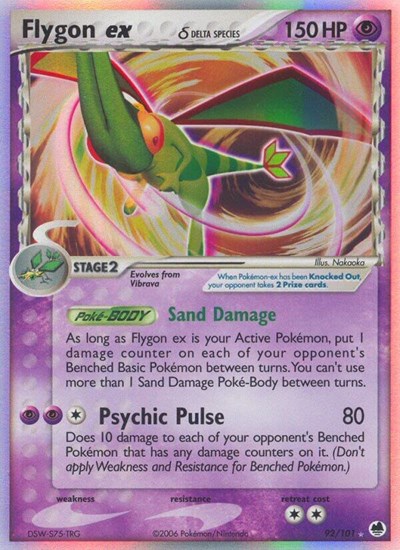 Flygon ex Delta Species92/101
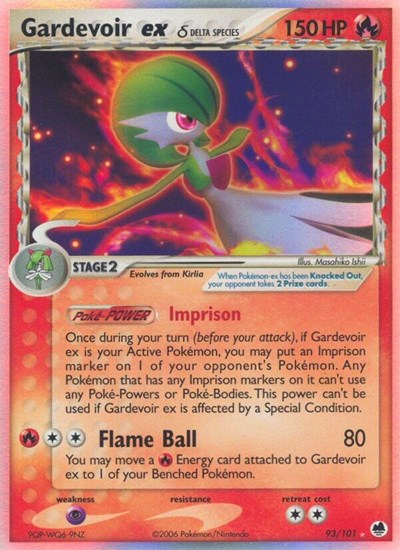 Gardevoir ex Delta Species93/101
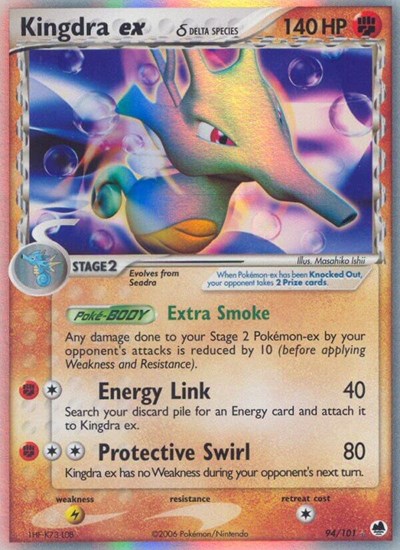 Kingdra ex Delta Species94/101
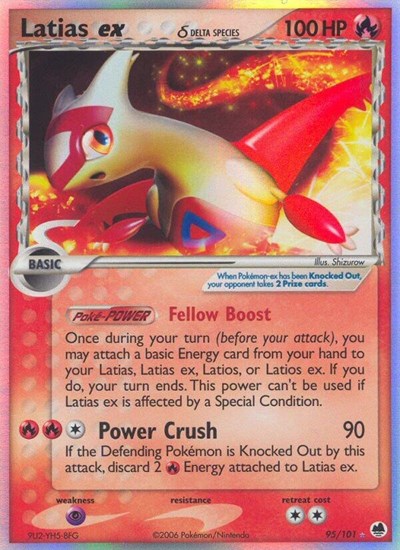 Latias ex Delta Species95/101
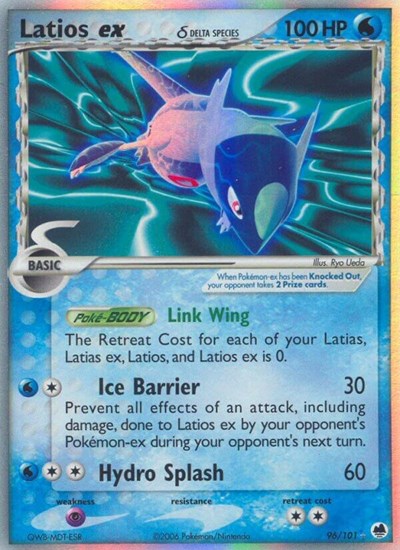 Latios ex Delta Species96/101
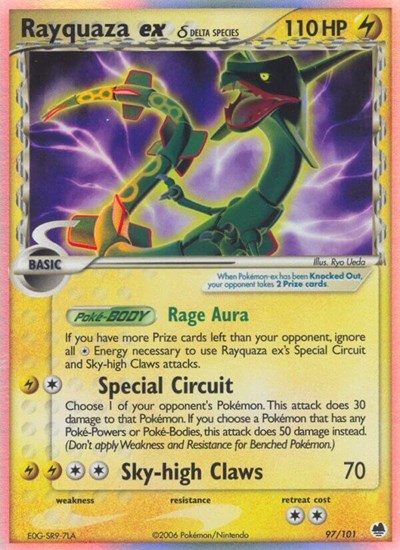 Rayquaza ex Delta Species97/101
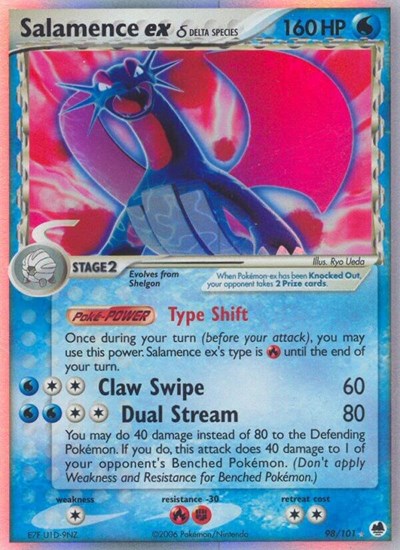 Salamence ex Delta Species98/101
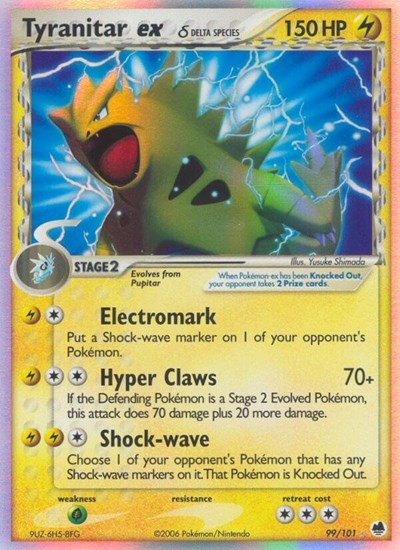 Tyranitar ex Delta Species99/101
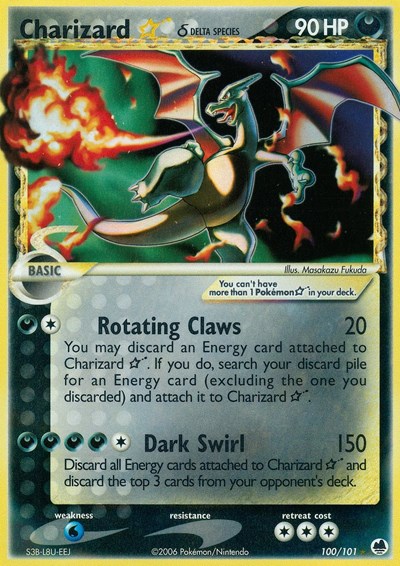 Charizard Star Delta Species100/101