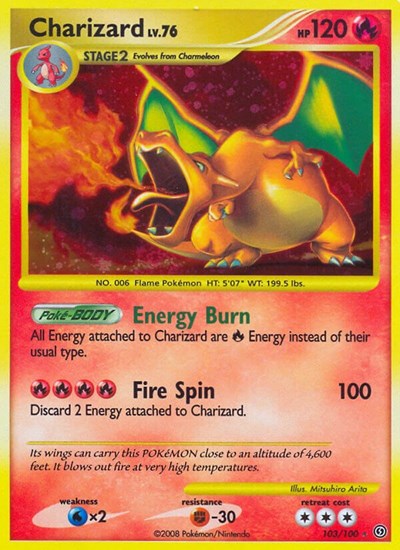
Charizard
Quick take
- The original chase card that defined Pokemon collecting
- Part of the 1999 Pokemon phenomenon
- Artwork by Mitsuhiro Arita became iconic
- Created the template for Charizard as the premium Pokemon
Collector's readWhat it means for your master set
Set landscapeWhere this card sits in Base Set
The storyWhere It All Started
Before this card, there was no Charizard tax. No chase card hierarchy. No collectors paying hundreds for a single card from a children's trading card game. This Charizard created all of that.
“The original chase card that defined Pokemon collecting”
Kids traded away their best cards for this one. Fights happened on playgrounds over it. Parents who didn't understand Pokemon suddenly understood that this card was valuable. The 1999 phenomenon centred on getting a Base Set Charizard.
Decades later, that energy persists. Graded copies sell for thousands. Even well-played copies have value. The card transcended Pokemon collecting to become a piece of 1990s nostalgia. People who never played the game know what a holographic Charizard looks like.
By the numbersMarket analysis
One of the most valuable non-graded vintage cards. Condition matters dramatically. A PSA 10 Base Set Charizard has sold for six figures at auction. Even lower grades command significant prices. The unlimited print version costs less than first edition or shadowless variants.
Prices spiked during the 2020-2021 Pokemon resurgence. Celebrities and investors entered the market. Prices have corrected since the peak but remain far above pre-2020 levels. The card's cultural status provides a floor.
Supply is fixed. More cards get graded, damaged, or lost every year. The generation that wanted this card in 1999 now has adult income. Fundamentals favour long-term value retention, though peaks like 2020-2021 may not repeat.
Enormous premium for high grades. PSA 10 copies have sold for over six figures. The gap between grades is significant. A PSA 9 costs far less than PSA 10. Even PSA 7 or 8 copies carry meaningful value.
Base Set had specific distribution. Roughly 1 holo per pack. With multiple holos in the set, getting Charizard specifically took luck. The unlimited print run produced many copies, but demand far exceeded supply in 1999.
Unlimited version is the most common. First Edition copies are worth more. Shadowless versions (no shadow on the right edge of the art box) fall between unlimited and first edition in price.
ArtworkWhy the art matters

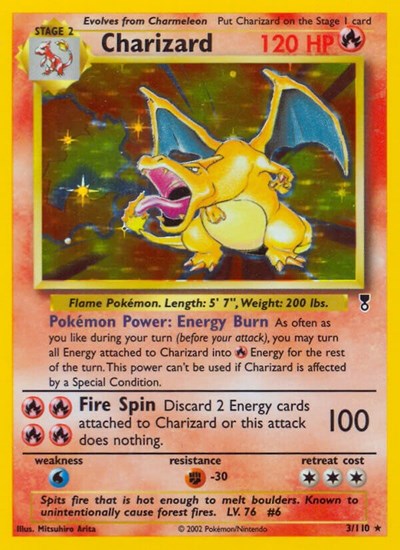
Mitsuhiro Arita illustrated the original Charizard, Venusaur, and Blastoise for Base Set. He's been drawing Pokemon since the beginning and continues creating TCG artwork today. His style defined what Pokemon cards look like.
Charizard stands on what looks like a rocky outcrop, wings spread, with flames around it. The pose is aggressive but not attacking. It's showing off, displaying power. The holographic treatment makes the fire-type Pokemon shimmer.
Original holo pattern from 1999 manufacturing. The cosmos/galaxy holographic style was standard for Base Set. Later print runs had slight variations in holo pattern. First edition stamps and shadowless prints are sub-variants collectors track.
This artwork is Pokemon. When people think of Charizard, they think of this image. Arita created the definitive Charizard. Every version since references or reinterprets what he established here.
BackgroundAbout Charizard
Charizard appeared in the original Pokemon Red and Blue in Japan (1996) and internationally (1998/1999). It's the final evolution of Charmander, one of three starter Pokemon. The fire-breathing dragon design made it instantly the most wanted starter, even though it's technically Fire/Flying, not Dragon.
- ›Fire-breathing dragon design appeals universally
- ›Final evolution of a starter creates personal attachment
- ›Ash's Charizard in the anime was a fan favourite
- ›This card cemented Charizard as THE Pokemon
- ›Game version was strong and looked impressive
- ›One of three starter final evolutions in Pokemon Red/Blue
- ›Ash's rebellious Charizard in the original anime
- ›Box mascot for Pokemon Red
- ›Appeared in every generation since
The Base Set card saw play in early Pokemon TCG. 120 HP was huge for the time. Fire Spin dealt 100 damage, enough to knock out most Pokemon. The energy discard cost was manageable. It was actually good, not just expensive.
Own it wellCollector guide
Most surviving copies have wear. These cards were played by children in 1999. Whitening on edges, scratches on holo, and corner wear are common. Truly mint copies are rare because few people protected cards properly back then.
Grading makes sense even for mid-condition copies due to high value. PSA is the most recognised service for vintage Pokemon. BGS and CGC also grade these. First edition and shadowless variants are especially worth grading. Read the grading guide →
If ungraded, use penny sleeves and rigid top loaders at minimum. Magnetic cases work for display. Climate control matters for vintage cardboard. Avoid humidity and temperature swings. See the storage guide →
eBay has the most listings. TCGPlayer carries vintage. Auction houses handle high-end graded copies. For raw cards, examine photos carefully. For graded, verify the slab is authentic through the grading company's database. See the singles buying guide →
Counterfeits exist due to high value. Check card weight, colour saturation, and holo pattern. The back colour should match other Base Set cards. When spending significant amounts, buy graded from reputable sellers only.
Protect your card
High Chase Score — protect and consider grading. · Amazon affiliate links · Storage guideWord on the streetCommunity sentiment
This is THE card. The community treats it as the foundation of Pokemon collecting. Discussions about 'best cards ever' include it automatically. The celebrity purchases during 2020-2021 brought mainstream attention.
- ›PSA 10 First Edition sold for over $400,000 at auction in 2021
- ›Even PSA 7-8 copies regularly sell for thousands
- ›Celebrity purchases (Logan Paul, etc.) made headlines
Any Base Set Charizard content performs well. Pull videos, grading reveals, and collection showcases featuring this card get engagement. The nostalgia factor draws views from beyond just Pokemon fans.
Good to knowFrequently asked questions
Keep collectingRelated cards


Plan your Other Base Set master set
Track every card, see what you're missing, and lay out your binder page by page.