Alakazam
Quick take
- First card in the 1999 Base Set numbering (#1/102)
- Mitsuhiro Arita illustration with all four spoons floating
- Three print variants: 1st Edition (grail), Shadowless (mid), Unlimited (entry)
- Unlimited Holofoil ~$59 raw, Shadowless ~$300-400, 1st Edition $1,500+
Collector's readWhat it means for your master set
Set landscapeWhere this card sits in Base Set
VariantsCard variants
Holofoil 1/102 · $69.34 — the only variant this card was printed in (no reverse holo or special pattern), so a master set needs just this one copy.
The storyThe #1 Card in the 1999 Base Set Numbering
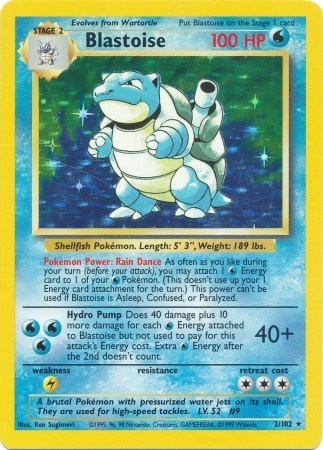
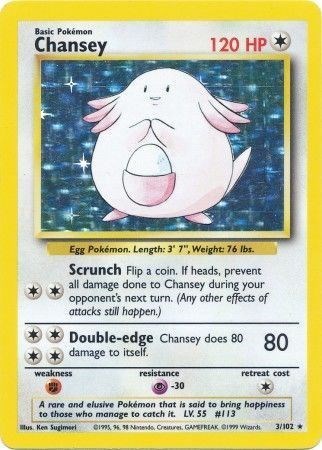
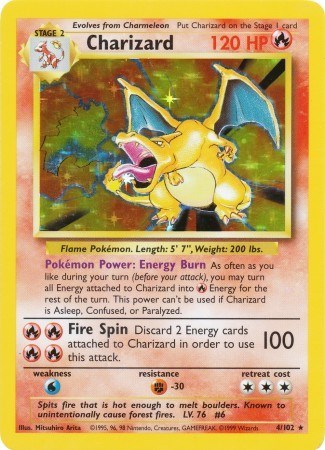
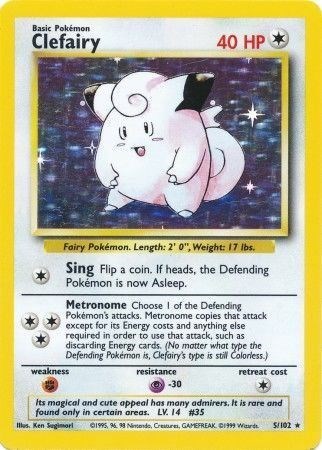
The 1999 Pokemon TCG Base Set numbered its cards alphabetically by Pokemon name within each rarity tier. Alakazam earned the #1 slot for the holofoils, ahead of Blastoise (#2), Chansey (#3), Charizard (#4), Clefairy (#5), and the rest of the Rare Holo lineup. The alphabetical numbering doesn't reflect chase status (Charizard at #4 is the legendary chase, not Alakazam), but the #1 position gives Alakazam a specific prestige among Base Set collectors who care about set-opening cards.
“First card in the 1999 Base Set numbering (#1/102)”
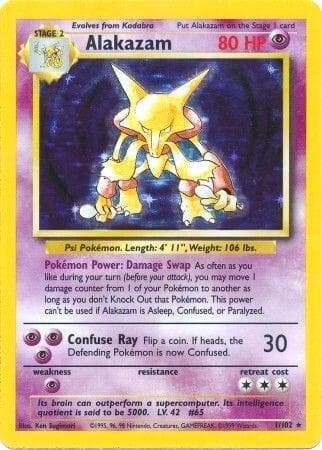
Mitsuhiro Arita's illustration shows Alakazam with all four spoons floating around the body, hands positioned to suggest active telekinesis. The composition is calmer than Arita's Charizard or Blastoise, with no explicit action or attack pose. Alakazam stands in a focused pose, the spoons doing the visual work. The Psychic-type design philosophy comes through cleanly.
Pricing has held the $50-70 range for Unlimited Holofoil across most market cycles, with Shadowless trading 4-5x higher and 1st Edition pushing past $1,500 raw. Alakazam never reached Charizard-tier collector demand, but the card's #1 position plus the Mitsuhiro Arita illustration keep it in the foundational tier of vintage Pokemon TCG collecting.
By the numbersMarket analysis
Unlimited Holofoil around $59 raw on TCGPlayer at last sync. Shadowless Holofoil typically $300-400 raw. 1st Edition Holofoil $1,500-2,500+ raw, with PSA 10 copies in the $5,000-7,000 range. Base Set Alakazam's pricing has been stable for years given closed supply and the #1 set position appeal.
Vintage Base Set pricing has appreciated structurally for two decades with cyclical corrections. Alakazam Unlimited Holofoil bottomed near $20-30 in the early 2010s, ran to $80-100+ during the 2020-2021 pandemic-era TCG boom, corrected through 2023, and has steadied around $55-65 since the 25th anniversary wave.
Stable long-term fundamentals. Alakazam tracks the broader Base Set holofoil market without leading or lagging significantly. The card is best treated as a master-set completion piece or Psychic-type focused collection entry rather than a speculative play. PSA 10 graded copies are the cleanest long hold.
PSA 10 copies of Unlimited Holofoil command 2-2.5x raw, $120-150 for clean grade. Centering on the long axis is the main grading variable. Base Set's known print quality issues mean PSA 10 grades are scarcer than for modern cards.
1999 Base Set holofoils pulled at roughly 1 in 11 packs across all Rare Holos in the set. Per specific holo, roughly 1 in 36 packs at original print rates. Alakazam shares the Rare Holo slot with Charizard, Blastoise, Venusaur, and other Rare Holos.
One of the Base Set's 16 Rare Holo cards. Pricing tier sits in the value range alongside Venusaur (~$116, but slightly different rarity dynamics) and below the headline Charizard chase. Alakazam's #1 position is unique within the set numbering.
ArtworkWhy the art matters

Ken Sugimori is the chief Pokemon designer and art director, responsible for the original Pokemon designs that debuted in 1996. His TCG illustration credits include several Base Set cards. The Sugimori style on TCG cards typically uses the official Pokedex-art aesthetic, more illustration-focused than the more action-oriented Mitsuhiro Arita compositions.
Alakazam in focused stance with all four spoons floating around the body in symmetric positioning. Hands raised in active-telekinesis pose. Background uses a stylised purple-and-yellow Psychic-type colour scheme with abstract energy patterns. The composition emphasises mental focus rather than physical action.
Holofoil rarity uses the classic late-90s 'cosmos' holofoil pattern across only the art panel. The frame and typography are matte. Shadowless versions lack the drop shadow behind the right-side art panel border.
Alakazam's design relies on the spoons as visual signifiers of the Psychic-type identity. The Base Set illustration foregrounds all four spoons in symmetric floating positions, which gives the card a distinctive visual signature. Most subsequent Alakazam TCG cards have used variations on this floating-spoon composition because Sugimori's original treatment is the canonical Alakazam visualization.
BackgroundAbout Alakazam
Alakazam debuted in Pokemon Red and Green (1996) as the final evolution of the Abra/Kadabra/Alakazam line. National Pokedex #065. Psychic-type. Evolves from Kadabra via trade, the classic trade-evolution mechanic that has frustrated solo players for decades. Generation I Psychic-type with one of the highest Special Attack stats in the original game. Mega-evolves into Mega Alakazam in Generation VI (Pokemon X/Y, 2013) with the design adding a beard-like extension and additional spoons.
- ›Generation I Psychic-type representative
- ›Trade-evolution mechanic gives Alakazam a specific player-journey narrative
- ›High Special Attack stat made Alakazam competitively relevant in Gen I
- ›Mega Alakazam from Gen VI gave the Pokemon modern resurgence
- ›Sugimori's spoon-based design has held cultural recognition for 25+ years
- ›Generation I in Pokemon Red/Green/Blue (1996-1998)
- ›Sabrina's Alakazam in the original Pokemon anime
- ›Pokemon Stadium prominent feature
- ›Mega Alakazam in Pokemon X/Y (2013)
- ›Pokemon GO release in 2016 with subsequent Mega Alakazam event
Alakazam has held competitive presence across multiple generations via Magic Guard (immunity to indirect damage) and high Special Attack. Mega Alakazam in Gen VI pushed offensive ceilings via Trace ability. The Base Set TCG card has playable stats for early-gen TCG format but is universally a display piece today.
Own it wellCollector guide
Vintage Base Set cards from 1999 have predictable issues: edge whitening, surface scratches on the cosmos holofoil, centering drift, and corner wear. The Psychic-type purple palette is moderately forgiving on minor surface marks. The card is now 25+ years old, condition varies significantly.
Grade clean copies. PSA 10 premium for Unlimited Holofoil is 2-2.5x raw, $120-150 on a $59 raw card. Verify centering at 55/45 or better. Base Set's known print quality issues mean PSA 10 grades are scarcer than for modern cards. Shadowless and 1st Edition variants justify grading even on NM copies given rarity. Read the grading guide →
Penny sleeve plus rigid top loader minimum. Magnetic case is the gold standard for raw long-term hold. Climate-controlled storage is non-negotiable at this age, humidity and temperature cycling over 25+ years is the primary degradation vector. See the storage guide →
Decide variant first. Unlimited (entry tier, ~$59), Shadowless ($300-400), or 1st Edition ($1,500+). Unlimited is the right starter purchase for collectors targeting Base Set without going deep on vintage. eBay's PSA-verified market is the deepest pool for graded copies. See the singles buying guide →
Counterfeit Base Set cards are common given the 25+ year age and price tier. Verify weight, cardstock thickness, back colour and centering, and the holofoil cosmos pattern. The original Base Set holofoil is hard to replicate accurately. Buy from reputable vintage dealers or PSA / CGC / BGS graded slabs for significant purchases.
Protect your card
High Chase Score — protect and consider grading. · Amazon affiliate links · Storage guideWord on the streetCommunity sentiment
Positive across the vintage TCG collector community. Alakazam Holofoil is the 'quiet first card' of Base Set, less hype than Charizard, less iconic than Blastoise, but no negative discourse. The card features in vintage collecting content and Psychic-type focused collections.
- ›1st Edition Holofoil PSA 10 sales in the $5,000-7,000 range at auction
- ›Shadowless Holofoil PSA 10 in the $1,000-1,500 range
- ›Unlimited Holofoil PSA 10 in the $120-150 range
- ›Raw Unlimited Holofoil around $59 on TCGPlayer market
Steady. The card features in 'vintage Pokemon TCG' content and 'Base Set #1 card' discussions. Psychic-type focused collectors prioritise this card as the headline Gen I Psychic-type chase.
Good to knowFrequently asked questions
Keep collectingRelated cards


Plan your Other Base Set master set
Track every card, see what you're missing, and lay out your binder page by page.