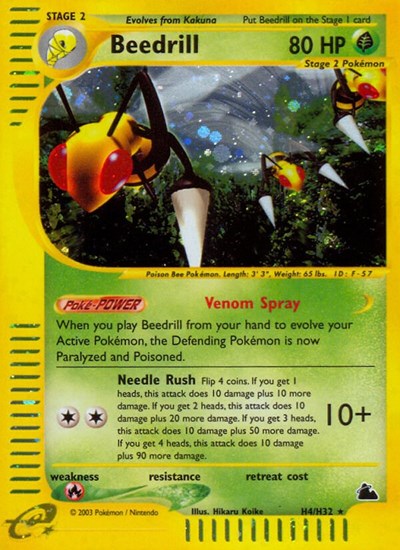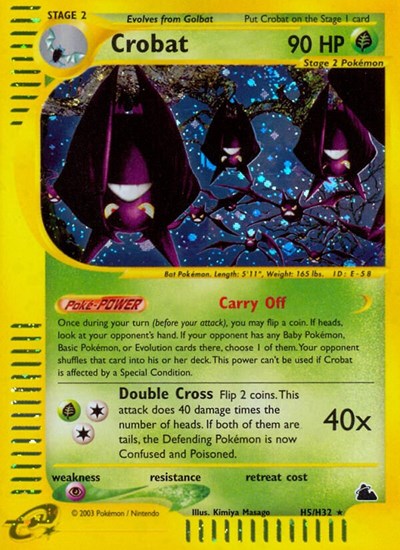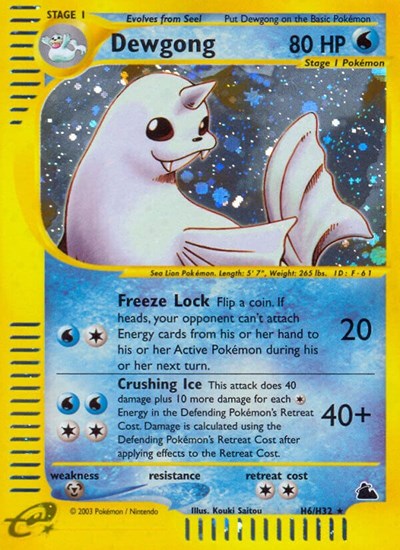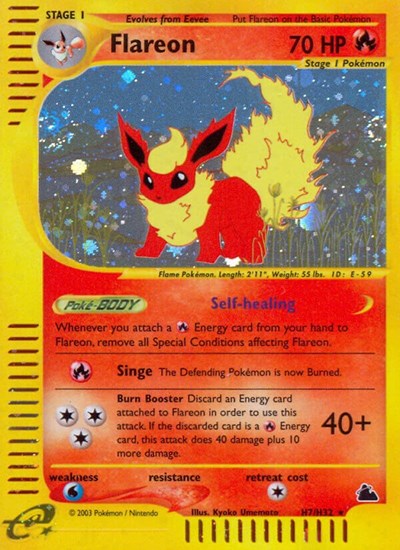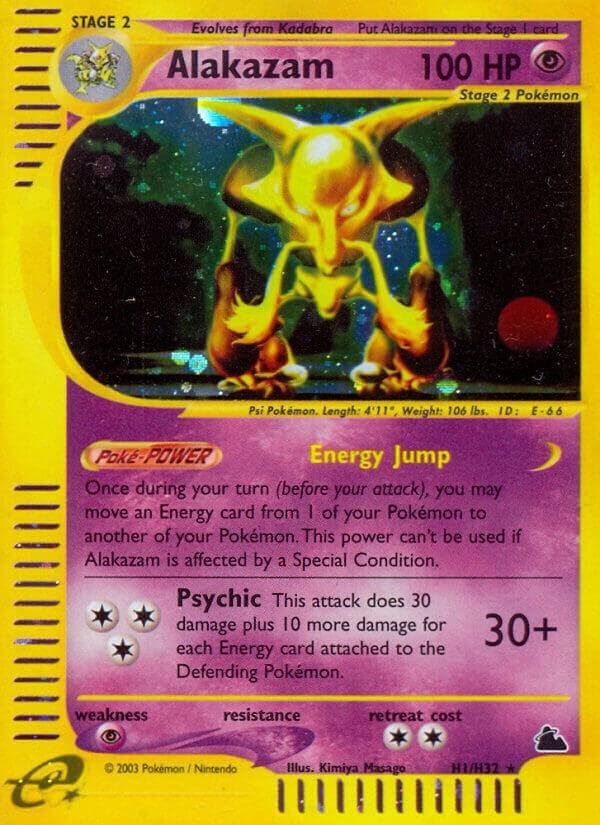
Alakazam H1
Quick take
- First card in the Skyridge holo subset (H1 of H32)
- From the last WOTC set, single print run, e-Card series
- Illustrated by Kimiya Masago
- An attainable entry point into a scarce vintage master set
Collector's readWhat it means for your master set
Set landscapeWhere this card sits in Skyridge
VariantsCard variants
Holofoil H01 · $1200.97 — the only variant this card was printed in (no reverse holo or special pattern), so a master set needs just this one copy.
The storyThe opening holo of the final WOTC set
Skyridge closed out the e-Card series in 2003. It was the last set Wizards of the Coast produced before the Pokemon TCG license moved to Nintendo, and it got a single print run. That gives every Skyridge holo a built-in scarcity story.
“First card in the Skyridge holo subset (H1 of H32)”
Alakazam carries the H1 slot. It is the first card in the 32-card holo subset, numbered separately from the 144 base cards. Collectors who build the Skyridge master set tend to start here. The card pairs a recognizable Gen 1 Psychic with Kimiya Masago artwork, and it sits at the front of a checklist that runs all the way up to the Crystal Pokemon at the top of the set.
For master set builders, H1 is one of the more attainable Skyridge holos. That makes it a logical first pickup when you commit to the set. It is not a Crystal card and not the headline chase, but it is genuine WOTC vintage with real supply constraints behind it.
By the numbersMarket analysis
Raw near-mint copies sit in the low-to-mid range for Skyridge holos, well under the Crystal cards and the set's biggest names. It trades like an attainable vintage holo, not a marquee chase. Graded gem-mint examples carry a strong premium because clean WOTC-era foil surfaces are hard to find.
Skyridge as a set has drifted upward over the last several years as collectors revisited the e-Card era and vintage WOTC supply tightened. Alakazam H1 has ridden that broader set-level demand rather than moving on its own merits.
The bull case here is structural, not card-specific. Supply is fixed and shrinking in high grade, and Skyridge sits among the most respected WOTC sets. H1 is a solid hold for set builders. The real money in Skyridge lives in the Crystals and the top holos, so treat this as a foundational piece rather than a flip.
High-grade copies command a meaningful premium over raw. PSA 10 and BGS gem-mint examples are scarce for a 2003 holo and trade well above near-mint raw. The gap widens sharply once you cross into pristine grades.
Skyridge predates modern rarity tiers, so there are no published per-card pull odds the way Scarlet & Violet sets list Double Rares, Illustration Rares, or Special Illustration Rares. What matters here is supply at the source. Skyridge received a single print run in 2003, during a period when Wizards printed far fewer packs than at the height of the 1999 to 2000 boom. That makes sealed product and any individual holo genuinely scarce, especially in high grade. With a modern SIR you can chase a known statistical pull rate over enough packs. Skyridge supply is fixed instead, and it only shrinks as cards get graded, damaged, or locked into collections.
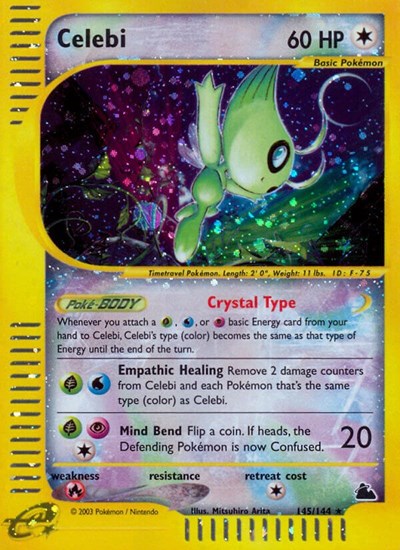
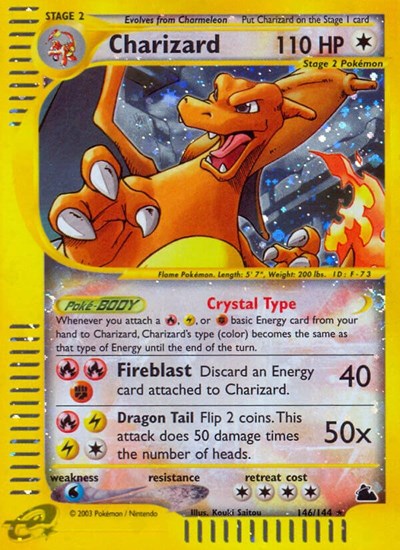
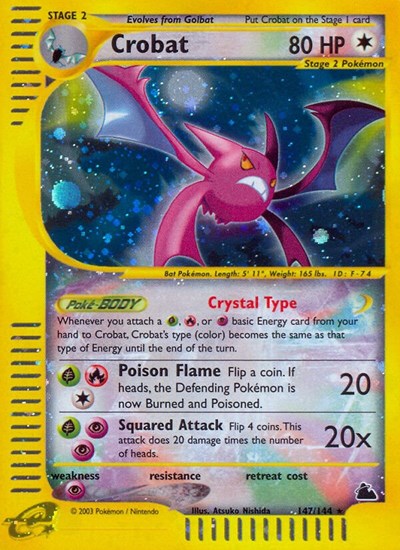
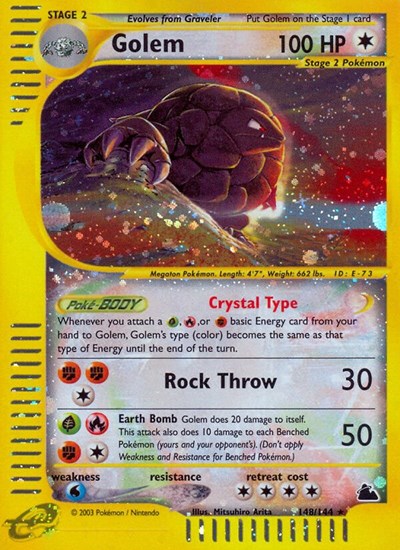
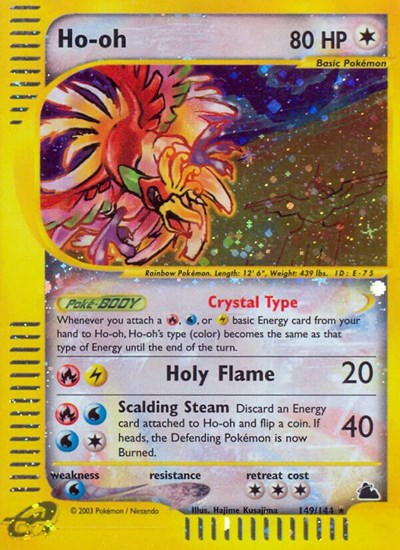
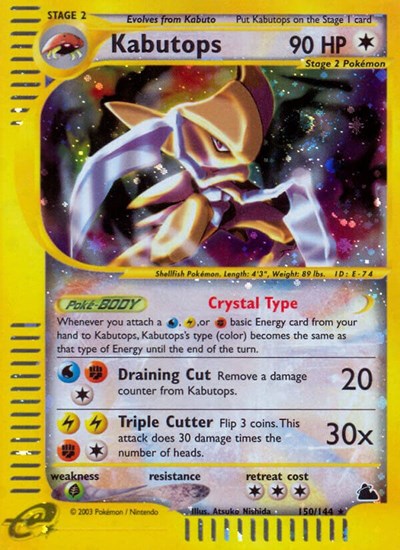
Among Skyridge holos, H1 is on the attainable end. It sits well below the six Crystal Pokemon (Charizard, Celebi, Crobat, Golem, Ho-Oh, Kabutops) that anchor the top of the set. It shares the same scarce single-print-run supply as every other card in it.
ArtworkWhy the art matters

Kimiya Masago illustrated cards across the WOTC and early e-Card era. The art on Skyridge holos leaned more atmospheric than the flat studio look of the earliest sets, and Masago's work fits that direction.
The card shows Alakazam in the e-Card series frame, with the holo treatment applied to the artwork window. I won't overstate the specifics of the scene I couldn't verify in detail. It carries the soft, illustrated look that defines Skyridge holos rather than the brighter, flatter style of the 1999 to 2000 sets.
This is the holofoil version, H1 of H32, separate from the non-holo Alakazam at 2/144. Skyridge used the e-Card layout with the dot-code strips along the card edges, a detail unique to the e-Card series. The holo pattern is the classic WOTC-era sheen, not the cosmos foil of the oldest sets.
It opens the Skyridge holo run. Being card H1 gives it a recognizable place in the checklist, and the e-Card framing plus Masago art make it a clean representative of the set's look.
BackgroundAbout Alakazam H1
Alakazam is the final evolution of Abra, a Gen 1 Psychic with a long card history dating back to Base Set. The high-intelligence flavor and the spoons make it one of the more recognizable original 151, which keeps demand steady across eras.
- ›Gen 1 Pokemon with broad nostalgic recognition
- ›Card lineage starting from Base Set Alakazam
- ›Psychic-type appeal and memorable design
- ›Plays as a Stage 2 with an Energy-moving Poke-POWER on this card
- ›Base Set holo Alakazam, one of the original 1999 holos
- ›Multiple reprints across WOTC and later eras
This card is a collector piece today, not a competitive option. In its own era the Energy Jump Poke-POWER had niche utility for shuffling Energy around. Skyridge cards are long out of Standard rotation.
Own it wellCollector guide
As a 2003 holo, expect edge wear, surface scratches on the foil, and centering issues. The dark e-Card borders show whitening on edges and corners easily, so inspect closely. Print lines and holo scratches are common and tank the grade fast.
Worth grading if the copy is clean. The premium for PSA 10 or BGS gem-mint over raw near-mint is significant for Skyridge holos. For an average-condition copy, the grading fee may not pay off, so be honest about centering and surface before submitting. Read the grading guide →
Sleeve in a penny sleeve plus a top loader or one-touch at minimum. For a piece you intend to keep raw long term, use acid-free holders and keep it out of direct light and humidity. The dark borders make any handling wear obvious, so minimize touching. See the storage guide →
Decide your grade tolerance first. If you want it for a master set and don't care about a slab, a clean raw near-mint copy is the value play. If you want a long-term hold or display piece, buy it already graded to skip authentication risk. Compare against sold listings, not asking prices, and factor in that high-grade Skyridge supply is thin. See the singles buying guide →
Skyridge is vintage WOTC and counterfeits exist, so verify before paying serious money. Check the holo pattern against known-genuine Skyridge holos, confirm the e-Card dot-code strips along the edges are crisp and correctly placed, and inspect the back swirl gradient and color. A light test can reveal the black core layer in genuine WOTC stock. Texture and weight should match other Skyridge cards in hand. For higher-value copies, buy graded from PSA, BGS, or CGC rather than raw from unknown sellers.
Protect your card
Low Chase Score — basic protection is plenty. · Amazon affiliate links · Storage guideWord on the streetCommunity sentiment
Skyridge is widely respected in the collector community as one of the strongest WOTC sets, prized for its art and its scarcity as the final Wizards-era release. Alakazam H1 is appreciated as a solid set holo and a common first purchase for people building the set, rather than a card people obsess over individually.
- ›High-grade gem-mint examples sell at a clear premium over raw near-mint, reflecting how scarce clean 2003 holo surfaces are
Most of the conversation centers on Skyridge as a set: its single print run, the Crystal Pokemon, and how hard sealed product is to find. Individual H-number holos like Alakazam come up mainly in master-set checklists and condition discussions.
Good to knowFrequently asked questions
Keep collectingRelated cards


Plan your Other Skyridge master set
Track every card, see what you're missing, and lay out your binder page by page.