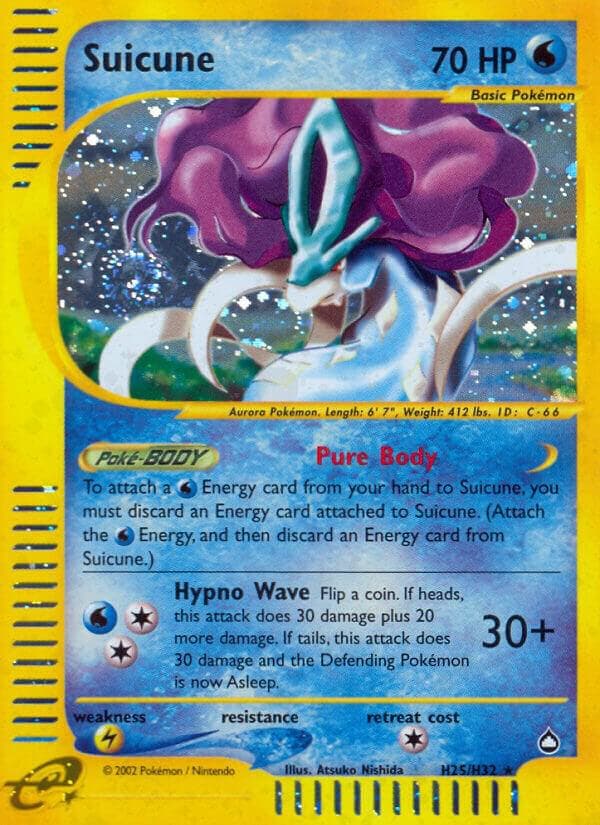
Suicune H25
Quick take
- Holo rare H25, part of the 32-card H1-H32 holo run in Aquapolis
- e-Card era release from January 2003, one of the last Wizards of the Coast sets
- Illustrated by Atsuko Nishida, a foundational WOTC-era artist
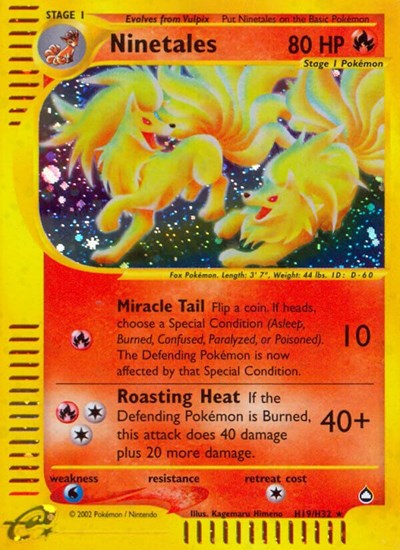
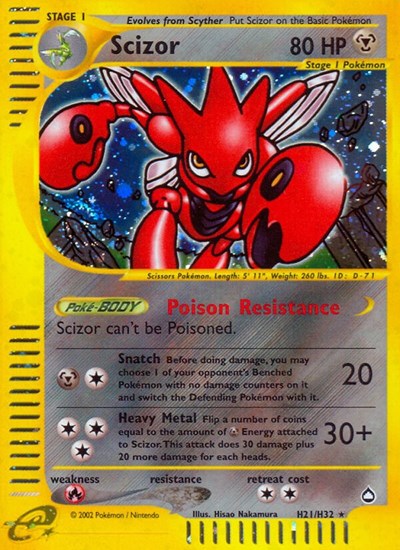
- Also issued as a reverse-holo jumbo box topper alongside Entei, Espeon, and Scizor
Collector's readWhat it means for your master set
Set landscapeWhere this card sits in Aquapolis
VariantsCard variants
Holofoil H25 · $539.99 — the only variant this card was printed in (no reverse holo or special pattern), so a master set needs just this one copy.
The storyA clean Suicune holo from the back end of the Wizards era
Aquapolis landed in January 2003, near the end of Wizards of the Coast's run with Pokemon. It was an e-Card set, so the cards carried a dot-code strip you could scan with the Nintendo e-Reader. That gimmick faded fast, but the set itself aged well. Aquapolis ran a separate numbering track for its 32 holo rares, labeled H1 through H32, and Suicune sits at H25.
“Holo rare H25, part of the 32-card H1-H32 holo run in Aquapolis”
Suicune is one of the Johto legendary beasts, and legendaries from this period carry a specific kind of nostalgia for collectors who grew up with Gold and Silver. The card is a straightforward Holo Rare, not a Crystal card. The Crystal subset is what made Aquapolis famous, so the whole set gets pulled along by that reputation. Suicune also got a second life as a reverse-holo jumbo box topper, one of four toppers in English booster boxes alongside Entei, Espeon, and Scizor.
For a master-set builder, H25 is a card you want in nice condition rather than one you chase for raw value. It fills a slot in the H-run, it shows a recognizable Pokemon, and it carries an artist name that means something.
By the numbersMarket analysis
Raw copies sit in the mid-tier of vintage holos, well below the Aquapolis Crystal cards and the Lugia secret rare. It is an accessible vintage legendary, not a trophy card.
Prices for clean vintage WOTC holos have drifted upward over the last several years as graded supply gets locked away. Suicune H25 follows that broad trend rather than spiking on its own. Centering and surface drive most of the spread.
Steady rather than explosive. The card rides the broader vintage tide and benefits from being a named-artist legendary, but it is not rare enough or hyped enough to move on its own. Buy it because you want it in the set, not as a flip.
Graded copies command a clear premium over raw, and the premium widens fast at the top. e-Card holos are prone to edge wear and surface scratches, so high-grade survivors are genuinely scarcer than the print run suggests. A gem-grade example sells for a large multiple of a raw near-mint copy.
Aquapolis predates the modern Scarlet and Violet rarity ladder, so there are no Double Rare or Illustration Rare odds to quote here. The set used a separate H-numbered track for its 32 holo rares, and Suicune is H25. As a standard holo rare in a 2003 e-Card set, it was a normal holo pull, far more common than the famous Aquapolis Crystal cards, which appeared at roughly one to three per booster box, or the secret rares like Lugia. The real scarcity now is condition. e-Card holos chip at the edges and scratch easily, so finding one clean is the actual challenge, not pulling one.
Within Aquapolis, the chase tier is the Crystal cards (Kingdra, Lugia, Nidoking) and the Lugia secret rare. Suicune H25 sits comfortably below those as an attainable holo, on par with the other legendary-beast holos in the set. Among the four box toppers (Entei, Espeon, Scizor, Suicune), Suicune tends to draw the most attention thanks to its game pedigree.
ArtworkWhy the art matters

Atsuko Nishida is one of the most important illustrators in Pokemon's history. She is widely credited with the original design work behind Pikachu and the Eevee line, and her card art runs deep through the Wizards of the Coast era. Her name on a vintage card is a real draw for art-focused collectors.
Suicune is rendered as the graceful water beast it is, with the long flowing crest and ribbon-like tails that define the design. Nishida's WOTC-era work leans soft and painterly rather than sharp and graphic, which suits a Pokemon built around wind and water.
This is a standard e-Card era holo. The foil sits in the artwork window with the period holo sheen, and the card carries the e-Reader dot-code strip along the border. The H-numbering (H25/H32) marks it as part of the dedicated holo subset rather than the main set list.
It pairs a fan-favorite legendary with a marquee illustrator on a late Wizards set. That mix of recognizable Pokemon, named artist, and short-lived e-Card format gives it more pull than its rarity tier alone would suggest.
BackgroundAbout Suicune H25
Suicune debuted in Gold and Silver as one of the three legendary beasts, alongside Entei and Raikou. It became the box legendary and roaming centerpiece of Pokemon Crystal, which cemented it as the most iconic of the trio. That status carries straight into the card market, where Suicune consistently outshines its two beast siblings in collector demand.
- ›Box legendary of Pokemon Crystal, a beloved Gen 2 game
- ›Most popular of the three Johto legendary beasts
- ›Strong, elegant design that translates well to card art
- ›Recurring presence in anime, movies, and later TCG sets
- ›Legendary beast trio in Pokemon Gold, Silver, and Crystal
- ›Featured legendary in the Crystal version of the Gen 2 games
- ›Multiple reprints across later TCG eras, including the separate Aquapolis jumbo box topper
Own it wellCollector guide
e-Card holos are notorious for edge whitening and surface scratching. Check the four corners under angled light and look across the holo for fine hairline scratches. Centering varies a lot in this set, so inspect the borders front and back before paying up.
Worth grading if you have a genuinely clean copy, since high grades are scarce and command a strong premium. For an average near-mint copy with minor edge wear, raw is usually the smarter hold unless you specifically need the slab for a registry set. Read the grading guide →
Sleeve in a penny sleeve plus a top loader at minimum, or a one-touch for anything you care about. Keep it out of direct light and away from humidity. Vintage holo foil and the e-Reader strip both dislike heat and moisture. See the storage guide →
Decide whether you want it raw for the set or graded for display before you shop. Raw near-mint copies are easy to find and reasonably priced. If you want a slab, buy the grade you actually want rather than gambling on a raw copy grading high, given how common surface flaws are in this set. See the singles buying guide →
Aquapolis is old enough to attract reprints and fakes. Verify the e-Card dot-code strip, check the back swirl gradient and color against a known-genuine card, and confirm the holo behaves like period foil. For anything you are paying real money for, buy a copy already graded by PSA, CGC, or BGS.
Protect your card
Low Chase Score — basic protection is plenty. · Amazon affiliate links · Storage guideWord on the streetCommunity sentiment
Collectors treat Suicune H25 as a well-liked, accessible vintage holo rather than a grail. It shows up often in Aquapolis master-set posts and Johto legendary collections. The Nishida credit gets mentioned regularly by art-focused buyers.
- ›Mid-grade graded copies trade regularly on the secondary market, reflecting how common surface flaws are in this set
Most discussion centers on the broader Aquapolis set, its Crystal cards, and the box toppers. Suicune rides along in those conversations as a fan-favorite of the beast trio. Talk tends to focus on condition and centering more than price.
Good to knowFrequently asked questions
Keep collectingRelated cards


Plan your Other Aquapolis master set
Track every card, see what you're missing, and lay out your binder page by page.