
Diamond and Pearl Master Set: 251 Cards, Checklist & Prices
By Cardrake Research Team · Updated
Released 2007

Get Collector to track your progress.
Diamond & Pearl Diamond and Pearl chase cards & key targets
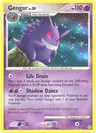
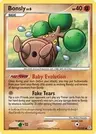
Gengar leads Diamond and Pearl at $199.99, with Infernape LVX ($131.66) and Bonsly ($114.42) behind it. The top three alone are 18% of the estimated master-set cost — plan these purchases first and the rest of the set follows on a normal budget.
| Rank | Card | Number | Rarity | Variant | Market Price |
|---|---|---|---|---|---|
| #1 | 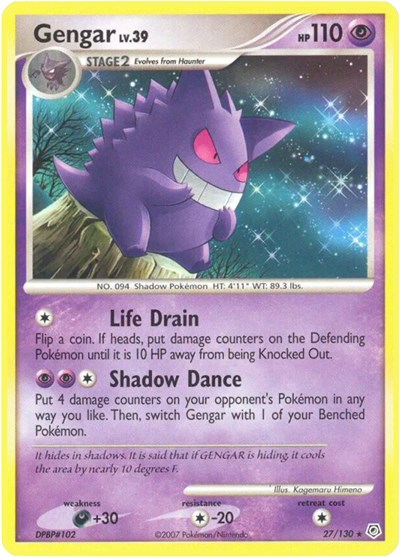 Gengar | 27/130 | Rare | Reverse Holo | $199.99 |
| #2 |  Infernape LVX | 121/130 | Ultra Rare | Holofoil | $131.66 |
| #3 |  Bonsly | 71/130 | Common | Reverse Holo | $114.42 |
| #4 |  Torterra LVX | 122/130 | Ultra Rare | Holofoil | $100.21 |
| #5 |  Haunter | 50/130 | Uncommon | Reverse Holo | $100.00 |
| #6 |  Empoleon LVX | 120/130 | Ultra Rare | Holofoil | $89.99 |
| #7 | 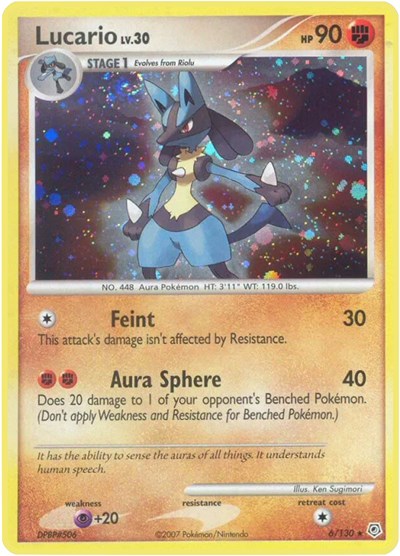 Lucario | 6/130 | Holo Rare | Holofoil | $64.57 |
| #8 | 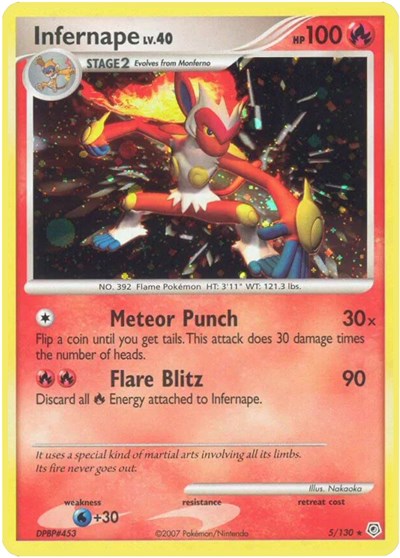 Infernape | 5/130 | Holo Rare | Reverse Holo | $62.49 |
| #9 | 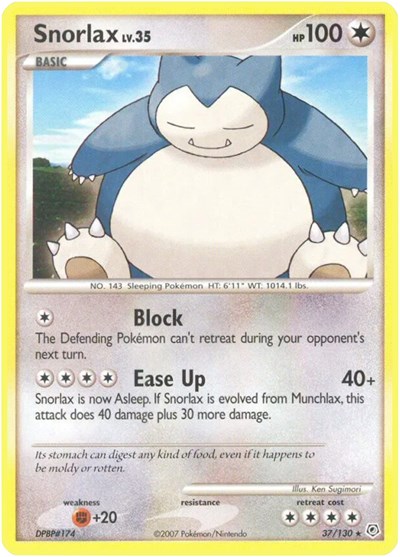 Snorlax | 37/130 | Rare | Reverse Holo | $55.95 |
| #10 | 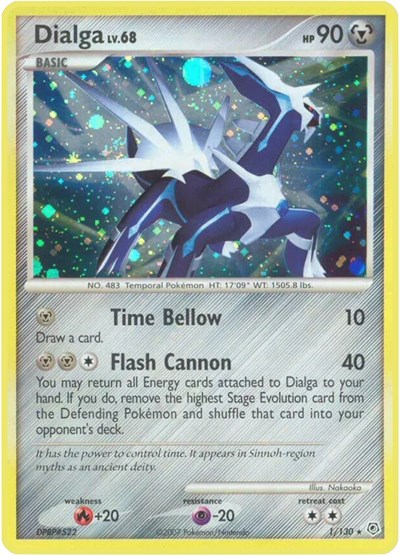 Dialga | 1/130 | Holo Rare | Holofoil | $44.11 |
Acquisition Strategy
- • Monitor price trends - chase cards often fluctuate based on tournament results and influencer coverage
- • Consider condition flexibility - a LP/MP copy can save 30-50% on vintage cards
- • Check multiple marketplaces - prices vary significantly between TCGPlayer, eBay, and local stores
- • Buy during market dips - major releases and reprints often cause temporary price drops
What's in the Diamond & Pearl Diamond and Pearl master set
The Diamond & Pearl Diamond and Pearl master set is 251 cards: 130 base + 121 reverse holos. That covers every printed variant — reverse holofoils, secret rares, and the special-art chase cards numbered past 130/130.
Open the Diamond & Pearl Diamond and Pearl binder layout planner →
About this set
Diamond & Pearl holds a unique position in Pokemon TCG history as the set that introduced Pokemon Lv.X, a completely new card mechanic where evolved Pokemon could level up further by placing a Lv.X card on top of them in play. This wasn't just a rebrand of the previous EX mechanic; Lv.X cards changed how decks were built and games were played. The set launched alongside the Diamond and Pearl video games on Nintendo DS, which became one of the best-selling Pokemon generations at the time and introduced the Sinnoh region that remains beloved among Gen 4 fans. Lucario, Empoleon, Infernape, and Torterra headline a Pokemon roster that resonates strongly with collectors now entering their 20s and 30s, the prime nostalgia purchasing demographic. The set is built around recognizable, popular Pokemon without the bloat of modern 200+ card sets. Dialga and Palkia as cover legendaries anchor the set thematically, while the four Lv.X cards provide premium chase targets that are expensive enough to feel special but accessible enough that most collectors can acquire them as raw singles. The reverse holofoil pattern unique to the DP era adds an aesthetic dimension that distinguishes these cards from any other era. For collectors who grew up with Gen 4, this set represents the same foundational significance that Base Set holds for Gen 1 collectors.
Where Diamond and Pearl fits in the era
Diamond & Pearl launched on May 23, 2007, marking the transition from Nintendo's Pokemon EX era to the Lv.X era. The set coincided with the North American release of Pokemon Diamond and Pearl on Nintendo DS (April 22, 2007), which would go on to sell over 17 million copies worldwide and establish the Sinnoh region as one of the franchise's most beloved settings. The TCG set was larger than previous base sets but well-organized around the new Lv.X mechanic. The four Lv.X cards (Lucario, Empoleon, Infernape, Torterra) were immediately recognized as the set's premium pulls, with Lucario Lv.X becoming the most sought-after card due to Lucario's breakout popularity from the 2005 film Lucario and the Mystery of Mew and later Super Smash Bros Brawl inclusion. The DP era of the TCG (2007-2009) coincided with a relative lull in mainstream Pokemon collecting between the original 1999-2001 boom and the modern resurgence that began around 2016. This means fewer DP-era products were preserved sealed, and fewer individual cards were stored in collector-grade conditions compared to later eras. Sealed DP booster boxes were still available at retail prices through 2009 and remained inexpensive until approximately 2019. The nostalgia cycle accelerated from 2022 onward as the Gen 4 cohort (born 1995-2002) reached their mid-to-late 20s with disposable income. Pokemon Legends: Arceus (2022) and the Pokemon Diamond/Pearl remakes (2021) reinforced Sinnoh nostalgia, directly benefiting DP-era card values.
Collecting challenges
The primary challenge with Diamond & Pearl collecting in 2026 is condition consistency. These cards are nearly 20 years old, and the overwhelming majority of surviving copies were used in competitive play during 2007-2010. Finding genuinely Near Mint copies, especially of Trainer cards and commonly-played Pokemon, requires patience and persistence that modern set collectors rarely encounter. The soft holofoil used across the DP era is particularly vulnerable to surface scratching, meaning cards that look clean in photos often reveal fine scratches under angled light or magnification. Print quality control in 2007 was inconsistent at best, with centering issues affecting an estimated 70-80% of cards. This means even pack-fresh copies may not grade well due to factory centering defects rather than handling damage. For collectors pursuing a complete master set including reverse holofoils, the scope is approximately 260 cards, manageable by modern standards but complicated by the scarcity of NM reverse holos. Many DP reverse holofoils were treated as bulk by original owners and stored poorly or discarded. The Lv.X cards present a separate challenge: they were the chase cards of their era and were frequently traded, played, and handled, making true NM copies the exception rather than the rule. Budget-wise, the complete master set is mid-range for vintage collecting, but the time investment in sourcing condition-matched copies significantly exceeds the effort required for modern sets.
Rarity breakdown
| Rarity | Cards | Share of printed set |
|---|---|---|
| Common | 47 | 36% |
| Uncommon | 38 | 29% |
| Rare | 25 | 19% |
| Holo Rare | 17 | 13% |
| Ultra Rare | 3 | 2% |
Price distribution
How card values spread across the set. Most cards are bulk under a dollar; a few chase cards hold most of the value.
Artist spotlight
The illustrators behind the most cards in this set, with their standout artwork. Tap a card for details.
Ken Sugimori
40 cards in this set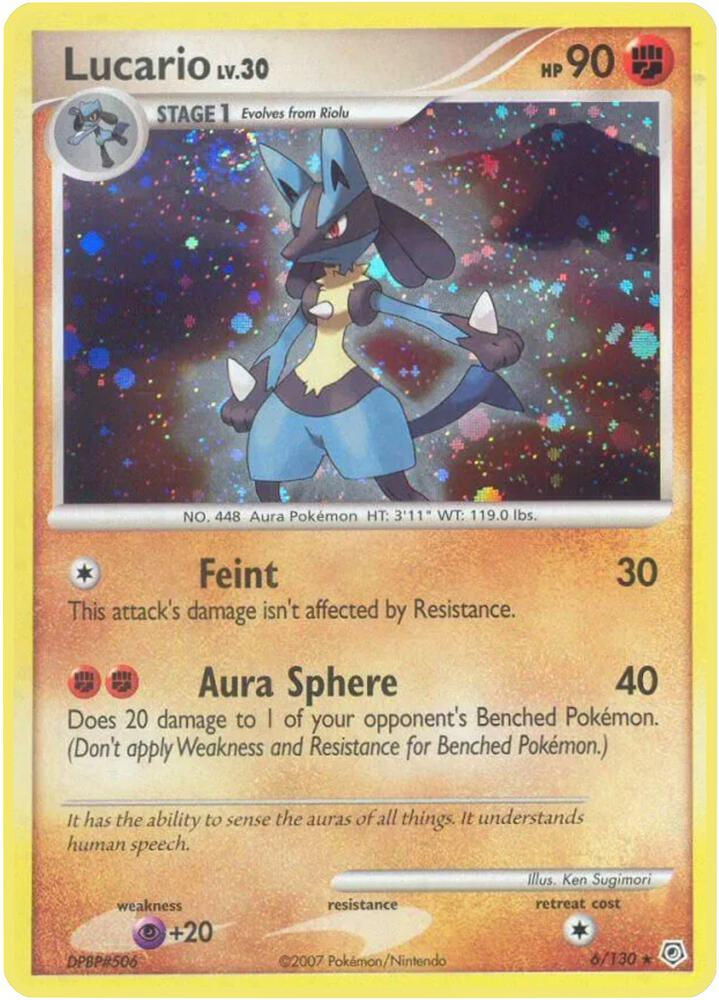
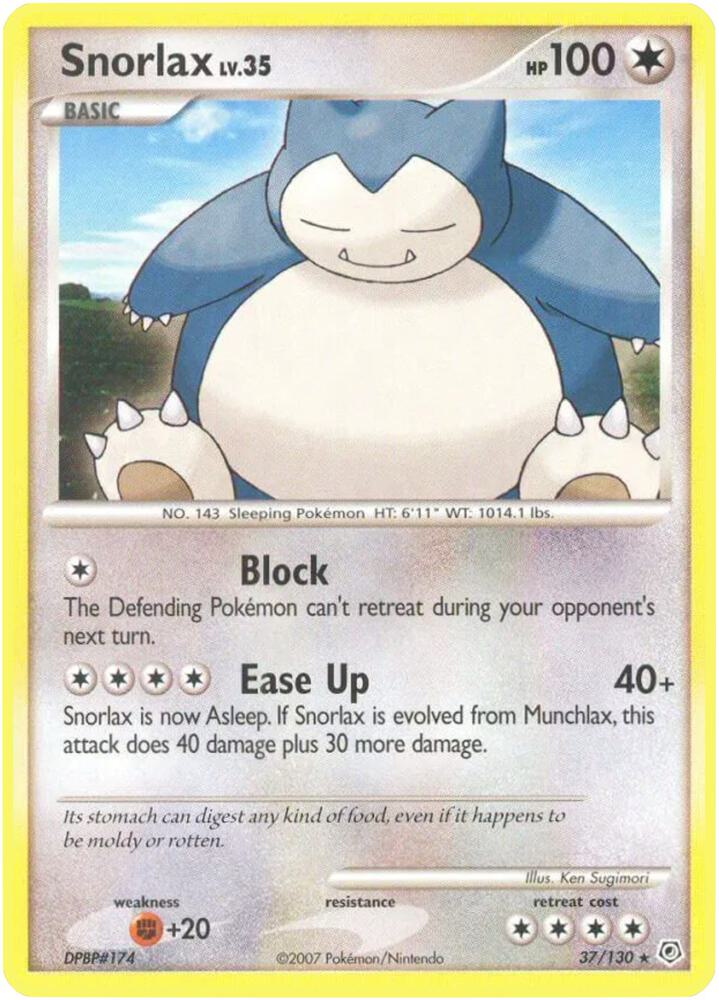


Nakaoka
13 cards in this set


Kouki Saitou
13 cards in this set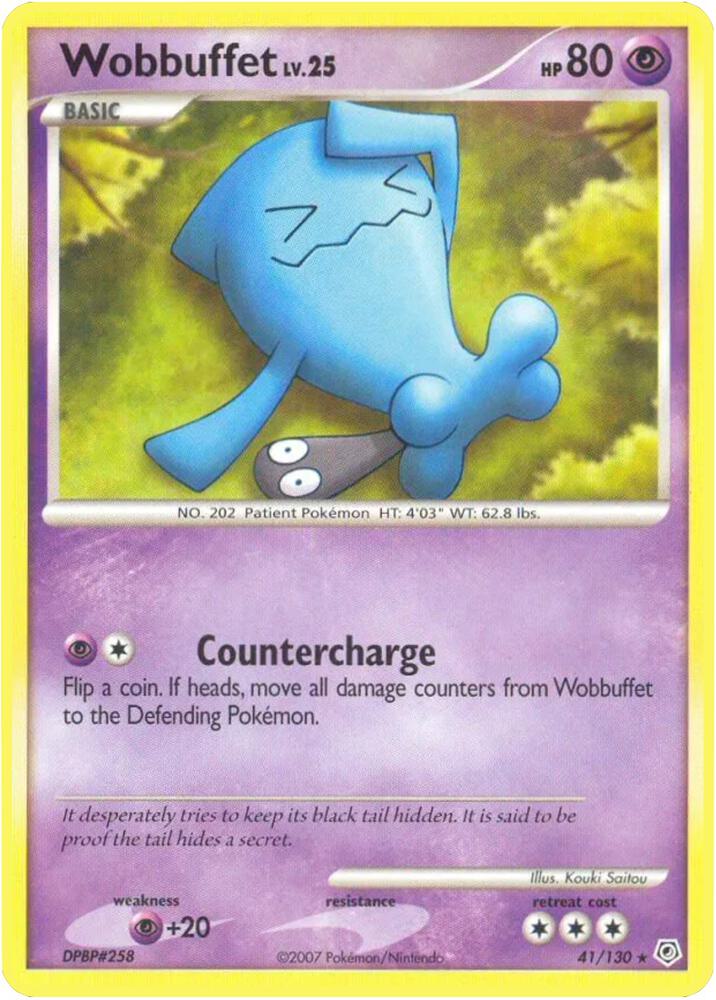


Atsuko Nishida
8 cards in this set


Kagemaru Himeno
8 cards in this set


Ryo Ueda
7 cards in this set


Diamond & Pearl Diamond and Pearl master set buying guide
Where to buy Diamond & Pearl Diamond and Pearl, which sealed product is worth the money, and when to pull the trigger.
Packs or singles?
Pack opening offers good value for this set
All Diamond & Pearl Diamond and Pearl sealed products
When to buy
Singles panic-priced. Sealed carries 30–50% premium. Wait if you can.
Best window for singles. Chase cards find their floor.
Bulk dips 15–20% on reprint news. Chase cards stay steady.
Sealed and top chase cards begin appreciation cycle.
Collecting strategy
Most cards in this set are worth around $5.61 as singles. Opening packs is the fun way to build your base of commons and uncommons with a chance at lucky pulls — but chase cards are statistically unlikely from sealed product. For most master set collectors, the smart approach is packs for bulk, singles for the rest.
Mix of singles and strategic pack opening
Track your progress in the Diamond & Pearl Diamond and Pearl binder planner →
Community insights
From collector discussions, forums, and social media.
What collectors are saying
- Released May 23, 2007 as the first Diamond & Pearl era set, introducing the Lv.X mechanic that replaced Pokemon ex. Lv.X cards are placed on top of existing Pokemon in play rather than being standalone basic or evolution cards, a fundamentally different approach that created unique deck-building strategies.
- Gen 4 nostalgia surge ongoing among 20-30 year old collectors who grew up with Diamond and Pearl on Nintendo DS (2007). This demographic is entering peak earning years, driving demand for complete DP-era sets. Parallels the Base Set nostalgia cycle that occurred among 90s kids in the 2010s.
- The set is larger than Base Set (102) but smaller than modern SV sets (190-280). The master set includes reverse holofoils, roughly doubling the checklist, and it remains a manageable completion target compared to modern sets.
- Lucario Lv.X is the headliner chase card, benefiting from Lucario's sustained popularity across games, anime, and competitive Pokemon. The card's value reflects this cross-media demand.
- Starter trio Lv.X cards (Empoleon, Infernape, Torterra) are mid-tier chase targets. Empoleon and Infernape see stronger demand than Torterra, reflecting competitive play history and character popularity.
- Dialga and Palkia holo rares anchor the set thematically as the cover legendaries of the Diamond and Pearl games. They trade cheap enough raw to be accessible chase cards for budget collectors.
- Print quality across the DP era is inconsistent. Centering issues and print line defects are common on holos and Lv.X cards. The QC standards of 2007 were noticeably lower than modern sets, affecting the percentage of cards that grade PSA · Professional Sports AuthenticatorThe largest card grading company. A PSA 10 is its top grade and carries the biggest price premium. 9-10.
- Sealed DP booster boxes have appreciated significantly, climbing to several times their 2007 MSRP · Suggested retail priceThe official US retail price set by The Pokemon Company. Stores and resellers often charge more. by 2026. The sealed market for DP-era products is growing as collectors recognize the approaching 20-year anniversary.
- DP-era reverse holofoils use a distinctive foil pattern different from both WOTC-era and modern reverse holos. Some collectors specifically target DP reverses for their aesthetic, creating niche demand.
- Community consensus rates Diamond & Pearl base as the strongest DP-era set for collecting due to the Lv.X mechanic introduction, recognizable Pokemon lineup, and Gen 4 nostalgia. Mysterious Treasures and Secret Wonders are considered the other top DP-era sets.
- TCGPlayer and eBay are the primary marketplaces for DP singles. Card condition varies wildly. Most surviving copies were played in decks during 2007-2010. NM · Near MintA card with at most tiny flaws. Listed prices assume this condition unless they say otherwise. copies are harder to source than their modern counterparts.
- The set bridges the EX era (Ruby & Sapphire through Power Keepers) and the Lv.X era. Collectors who completed EX-era sets often move to DP as the natural next milestone, creating steady demand.
Tips from the community
- Start with the four Lv.X cards (Lucario, Empoleon, Infernape, Torterra) as they represent the set's premium tier. Buy raw NM · Near MintA card with at most tiny flaws. Listed prices assume this condition unless they say otherwise. copies if budget-conscious or target PSA · Professional Sports AuthenticatorThe largest card grading company. A PSA 10 is its top grade and carries the biggest price premium. 9 for investment-grade collecting.
- Inspect DP-era holos for centering carefully. The 2007 print runs had notably inconsistent centering. Cards that appear NM · Near MintA card with at most tiny flaws. Listed prices assume this condition unless they say otherwise. may have 65/35 or worse centering that caps grading potential at PSA · Professional Sports AuthenticatorThe largest card grading company. A PSA 10 is its top grade and carries the biggest price premium. 8-9. Use a centering tool before buying for grading purposes.
- Reverse holofoils from Diamond & Pearl are increasingly scarce in NM · Near MintA card with at most tiny flaws. Listed prices assume this condition unless they say otherwise. condition. These were commonly used as deck fillers and suffered heavy play wear. Budget extra time for sourcing NM reverse holos. They may take weeks to find at reasonable prices.
- Japanese Diamond & Pearl cards (released October 2006, seven months earlier) offer the same artwork at 40-60% lower prices. A valid budget alternative for display collectors.
- Check for holo scratches under angled light. DP-era holofoil is a soft foil type that scratches easily. Light scratches that are invisible in photos can be clearly visible in person and drop grading scores to PSA · Professional Sports AuthenticatorThe largest card grading company. A PSA 10 is its top grade and carries the biggest price premium. 7-8.
- Buy the non-holo rares and uncommons in bulk lots rather than individually. DP commons/uncommons in NM · Near MintA card with at most tiny flaws. Listed prices assume this condition unless they say otherwise. condition cost pocket change, but buying complete common/uncommon sets from a single seller saves 30-40% versus individual purchases.
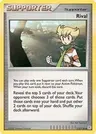
- Trainer cards from DP Base (Night Maintenance, Rival, Professor Rowan) saw heavy competitive play and are disproportionately difficult to find in NM · Near MintA card with at most tiny flaws. Listed prices assume this condition unless they say otherwise. condition. Budget extra for these if pursuing a condition-matched master set.
- Grade Lucario Lv.X only if the card has strong centering (55/45 or better front and back), clean holo surface, and sharp corners. PSA · Professional Sports AuthenticatorThe largest card grading company. A PSA 10 is its top grade and carries the biggest price premium. 10 populations are modest, and the multiplier justifies the submission cost.
- Consider the Theme Deck exclusive cards. Diamond & Pearl had several exclusive reprints in the theme decks. True master set completionists need to determine whether these count for their goals.
Market insights
- Lucario Lv.X is the primary chase card, with strong demand driven by Lucario's cross-media popularity (Smash Bros, anime, mainline games).
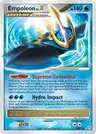
- Empoleon Lv.X is the second most valuable Lv.X due to competitive play history and starter Pokemon appeal.
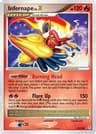
- Infernape Lv.X sits just behind Empoleon. Fire-type bias in the collecting community keeps demand steady.
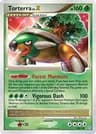
- Torterra Lv.X is consistently the lowest-valued starter trio Lv.X, but it is closing the gap as DP-era appreciation continues.
- Dialga holo is a cover legendary with strong brand recognition. Dialga's popularity increased with Legends: Arceus (2022).
- Palkia holo trades slightly behind Dialga in collector demand but has the same scarcity profile.
- A complete NM · Near MintA card with at most tiny flaws. Listed prices assume this condition unless they say otherwise. base set without the Lv.X premiums costs roughly half of a full master set with reverse holos. NM Lv.X copies add a modest premium on top.
- Sealed booster boxes keep climbing, and the effective cost per pack is steep. Opening is not EV · Expected valueThe average value of the cards you would pull from a pack or box. Useful for comparing products, not a promise.-positive. Sealed appreciation makes holding the better financial play.
- DP-era annual appreciation rate: 8-15% for key holos and Lv.X cards over the past 3 years. Gen 4 nostalgia cycle is earlier stage than Gen 1/2, suggesting further appreciation runway.
- International demand is moderate. English DP cards command 30-50% premiums over Japanese equivalents. European collectors drive secondary demand through Cardmarket.
Watch out for
- Holo surface scratches are the most common condition issue on DP-era cards. The soft holofoil used in 2007 scratches more easily than modern foil treatments. Always inspect holos under multiple light angles before purchasing for grading.
- Centering issues affect a high percentage of DP print runs. Community estimates suggest only 20-30% of DP-era cards meet the 55/45 centering threshold for PSA · Professional Sports AuthenticatorThe largest card grading company. A PSA 10 is its top grade and carries the biggest price premium. 10 eligibility. Pre-screen carefully.
- Counterfeit risk is LOW for individual DP singles, as the card values don't justify sophisticated counterfeiting. However, fake sealed booster boxes exist. Verify sealed product authentication (WOTC-era seal patterns, box weight) before high-value sealed purchases.
- Reverse holofoil warping is common on DP-era cards that were stored in humid conditions. The foil layer responds differently to moisture than the paper backing, causing a bow. Minor warping can sometimes be flattened with controlled pressure, but severe warping is permanent.
- A DP Base master set including reverse holos is a significant commitment. Budget carefully and buy over time rather than attempting to complete in a single purchasing spree, as condition-hunting takes patience.
- The DP-era competitive format has been obsolete for over 15 years. Card values are driven entirely by collecting demand, not playability. This is a pure collector market. If general Pokemon collecting interest declines, DP cards have no competitive demand floor.
Diamond & Pearl Diamond and Pearl grading guide
Which Diamond & Pearl Diamond and Pearl cards are worth the $20+/card grading fee? PSA 10 premiums vary significantly by rarity tier. See our complete grading guide for how grading works, costs, and international submission options.
Tier 1 - Strong Grading Candidates
Worth gradingThe top three Lv.X cards all justify grading at PSA 10 premiums of 5-8x raw value. Pre-screen for centering (55/45+ front), holo surface scratches under angled light, and corner sharpness. DP-era soft foil makes surface inspection critical.
Tier 2 - Selective Grading
Worth gradingThese cards have moderate PSA 10 premiums that justify grading only for clearly NM copies with strong centering. Torterra Lv.X is the weakest of the four Lv.X cards but still has collectors willing to pay PSA 10 premiums.
Tier 3 - Not Recommended
Skip gradingGrading fees ($20-35) approach or exceed raw card values for mid-tier DP holos. PSA 10 premiums exist but the math is marginal after submission costs. Keep raw unless the card is truly exceptional condition.
Tier 4 - Never Grade
Skip gradingGrading costs vastly exceed card values. High multipliers are misleading because the base values are so low. A 10x premium on a $1 card is $10, still less than the grading fee. Keep raw for set completion.
Before you submit — PSA checklist, fees, and tips▾
PSA 10 requirements
- Centering
- 55/45 minimum front and back. Modern SIRs frequently fail here — pre-screen every candidate.
- Corners
- Sharp, no whitening under magnification. Sleeve the moment you pull the card.
- Surface
- No scratches, print lines, or holo damage. SIR foils are especially vulnerable from the factory.
- Edges
- No chipping or fraying. Inspect under bright light.
PSA service tiers
- Value
- $20/card, 4–6 month turnaround. Right for raw values $75–500.
- Regular
- $50/card, 6–8 week turnaround. Right for raw values $500+.
- Express
- $75–150/card, 2–3 week turnaround. Only worth it above $1,000 raw.
Budget for a 5-card submission: $135–170 once you add shipping, insurance, and supplies.
Tips from experienced submitters
- • Pre-screen with a loupe — 70%+ of modern cards fail centering.
- • PSA Collectors Club ($99/year) pays for itself with 2–3 value-tier submissions.
- • Ship in batches of 10+ to amortize shipping and insurance.
- • PSA 9 typically sells at 40–60% of PSA 10 — still a premium over raw.
Storage & protection
Protect your 251-card Diamond & Pearl Diamond and Pearl master set with archival binders, perfect-fit sleeves, and top loaders for the chase cards. Plan on $150–250 for complete coverage.
Premium binders
Dragon Shield Codex · $30–50
Archival pages, side-loading pockets, acid-free. For 251 cards, plan on 14 double-sided 9-pocket pages.
Perfect-fit sleeves
Every card · $30–50 total
Prevent micro-scratches from sliding cards in and out of binder pockets. You'll need roughly 3 packs for full coverage.
Top loaders
Chase cards · $15–25/pack
Rigid protection for SIRs and grading candidates. Essential for anything over $50 raw.
Diamond & Pearl Diamond and Pearl card list
Every card in the Diamond & Pearl Diamond and Pearl master set. Search, filter by rarity or price, and mark off what you own as you go. Tap any card for prices and variants.
Track your collection. Mark cards owned or wanted, add condition & notes, and watch your master set progress.
| Card | Price | Collection |
|---|---|---|
Dialga1/130 · Holo Rare | $44.11 | Holo RH |
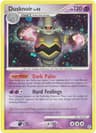
Dusknoir2/130 · Holo Rare | $13.88 | Holo RH |
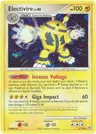
Electivire3/130 · Holo Rare | $17.68 | Holo RH |
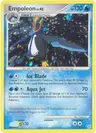
Empoleon4/130 · Holo Rare | $23.83 | Holo RH |
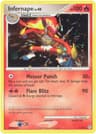
Infernape5/130 · Holo Rare | $30.10 | Holo RH |
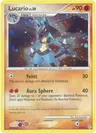
Lucario6/130 · Holo Rare | $64.57 | Holo RH |
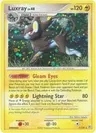
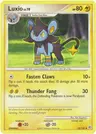
Luxray7/130 · Holo Rare | $23.74 | Holo RH |
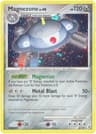
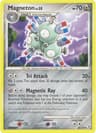
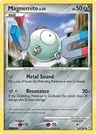
Magnezone8/130 · Holo Rare | $13.80 | Holo RH |
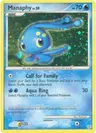
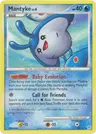
Manaphy9/130 · Holo Rare | $18.02 | Holo RH |
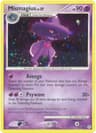
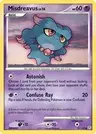
Mismagius10/130 · Holo Rare | $16.02 | Holo RH |
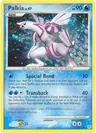
Palkia11/130 · Holo Rare | $30.51 | Holo RH |
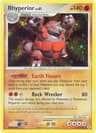
Rhyperior12/130 · Holo Rare | $8.95 | Holo RH |
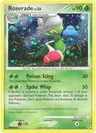
Roserade13/130 · Holo Rare | $14.84 | Holo RH |
Shiftry14/130 · Holo Rare | $8.30 | Holo RH |
Skuntank15/130 · Holo Rare | $4.91 | Holo RH |
Staraptor16/130 · Holo Rare | $19.99 | Holo RH |
Torterra17/130 · Holo Rare | $17.62 | Holo RH |
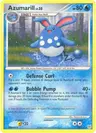
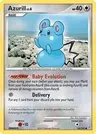
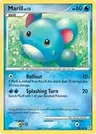
Azumarill18/130 · Rare | $3.48 | N RH |
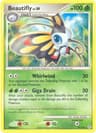
Beautifly19/130 · Rare | $1.32 | N RH |
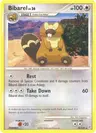
Bibarel20/130 · Rare | $2.65 | N RH |
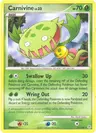
Carnivine21/130 · Rare | $1.54 | N RH |
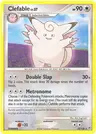
Clefable22/130 · Rare | $3.29 | N RH |
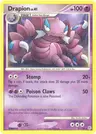
Drapion23/130 · Rare | $2.24 | N RH |
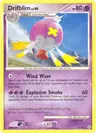
Drifblim24/130 · Rare | $1.65 | N RH |
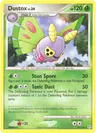
Dustox25/130 · Rare | $1.61 | N RH |
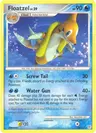
Floatzel26/130 · Rare | $1.35 | N RH |
Gengar27/130 · Rare | $93.72 | N RH |
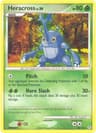
Heracross28/130 · Rare | $1.14 | N RH |
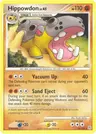
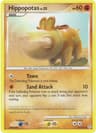
Hippowdon29/130 · Rare | $1.10 | N RH |
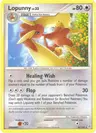
Lopunny30/130 · Rare | $5.03 | N RH |
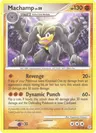
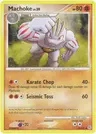
Machamp31/130 · Rare | $4.56 | N RH |
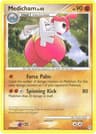
Medicham32/130 · Rare | $0.62 | N RH |
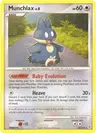
Munchlax33/130 · Rare | $18.48 | N RH |
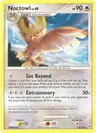
Noctowl34/130 · Rare | $0.92 | N RH |
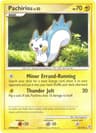
Pachirisu35/130 · Rare | $2.39 | N RH |
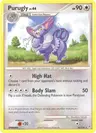
Purugly36/130 · Rare | $3.12 | N RH |
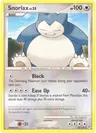
Snorlax37/130 · Rare | $28.69 | N RH |
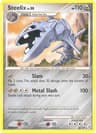
Steelix38/130 · Rare | $4.47 | N RH |
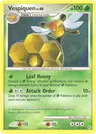
Vespiquen39/130 · Rare | $1.34 | N RH |
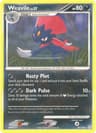
Weavile40/130 · Rare | $2.80 | N RH |
Wobbuffet41/130 · Rare | $3.45 | N RH |
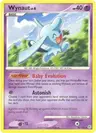
Wynaut42/130 · Rare | $5.83 | N RH |
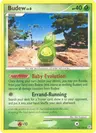
Budew43/130 · Uncommon | $4.57 | N RH |
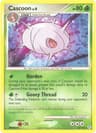
Cascoon44/130 · Uncommon | $0.49 | N RH |
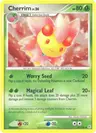
Cherrim45/130 · Uncommon | $1.13 | N RH |
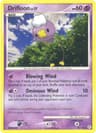
Drifloon46/130 · Uncommon | $0.66 | N RH |
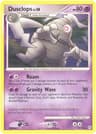
Dusclops47/130 · Uncommon | $0.55 | N RH |
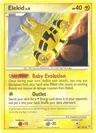
Elekid48/130 · Uncommon | $1.85 | N RH |
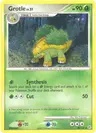
Grotle49/130 · Uncommon | $1.09 | N RH |
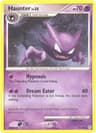
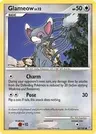
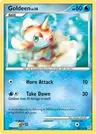
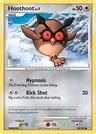
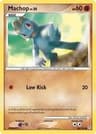
Haunter50/130 · Uncommon | $5.76 | N RH |



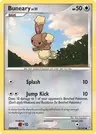
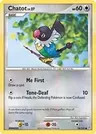
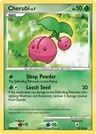
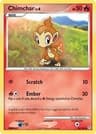




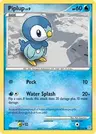
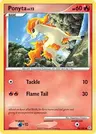
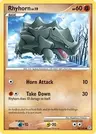
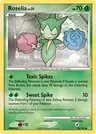
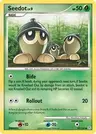

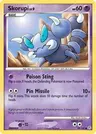
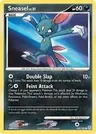


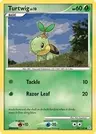















Frequently asked questions
How many cards are in the Diamond and Pearl master set?▾
The Diamond and Pearl master set is 251 cards: 130 base cards, 121 reverse holofoils, and 0 secret rares and special-art cards. The base set alone is 130 unique cards, numbered 001/130 through the secret rares. Track all 251 with the free interactive checklist on Cardrake.
See also: Binder layout planner
What are the chase cards in Diamond and Pearl?▾
The top chase card in Diamond and Pearl is Gengar (Rare) at $199.99. Other high-value cards include Infernape LVX ($131.66) and Bonsly ($114.42). See the full chase card rankings above for current prices.
See also: Chase card rankings, Binder layout planner
How much does a Diamond and Pearl master set cost?▾
A complete Diamond and Pearl master set is estimated at $2,521 based on current TCGPlayer market prices. Budget collectors can start with the base set for significantly less, while premium completionists targeting graded copies should expect higher costs.
See also: Master set budgeting guide, Binder layout planner
What is the complete Diamond and Pearl master set card list?▾
The Diamond and Pearl set contains 130 base cards across 5 rarity tiers. View the complete card list with images, prices, and rarity information on the Diamond and Pearl binder layout page on Cardrake.
See also: Binder layout planner
How should I organize Diamond and Pearl in a binder?▾
For 251 cards (including reverse holos), a 9-pocket binder needs 14 double-sided pages and a 12-pocket binder needs 11 pages. Use Cardrake's visual binder planner to preview exactly how your cards will be laid out before you start sleeving.
See also: Binder layout planner, Binder organization guide
Is there a Diamond and Pearl master set checklist?▾
Yes — Cardrake provides a visual master set checklist for Diamond and Pearl with all 130 cards. You can track owned and missing cards, view your completion percentage, and plan your binder layout. Sign up for the Collector plan to save your progress.
See also: Binder layout planner
Is Diamond and Pearl worth collecting as a master set?▾
Diamond and Pearl has 130 unique cards with an estimated completion cost of $2,521. It is a mid-sized master set that offers a solid collecting challenge. With 42 cards over $10, the set has strong chase card appeal.
See also: Master set guide, Binder layout planner
What are Pokemon Lv.X cards?▾
Lv.X (Level X) cards are special evolution cards introduced in Diamond & Pearl. They are placed on top of a Pokemon already in play, leveling it up with new attacks and abilities while retaining the attacks of the Pokemon underneath. Lv.X cards replaced the previous EX mechanic and were the premium chase cards of the DP era (2007-2009).
What is the most valuable card in Diamond & Pearl?▾
Lucario Lv.X is the primary chase card, and PSA · Professional Sports AuthenticatorThe largest card grading company. A PSA 10 is its top grade and carries the biggest price premium. 10 copies trade at a multiple of the raw NM · Near MintA card with at most tiny flaws. Listed prices assume this condition unless they say otherwise. price. It benefits from Lucario's sustained popularity across the Pokemon franchise. The three starter Lv.X cards (Empoleon, Infernape, Torterra) are the secondary chase targets.
Are Diamond & Pearl cards a good investment?▾
DP-era cards have appreciated 8-15% annually for key holos and Lv.X cards over the past 3 years, driven by Gen 4 nostalgia. Sealed booster boxes have doubled from pre-2020 levels. The nostalgia cycle is earlier stage than Gen 1, suggesting continued appreciation. However, these are pure collector market items with no competitive play demand floor.
Is Diamond & Pearl base set rare?▾
The set had substantial print runs in 2007, so the cards themselves are not scarce in played condition. However, Near Mint copies are increasingly rare because most were played in decks. NM Lv.X cards and holos are notably harder to find than their modern equivalents. Sealed booster boxes are scarce with fewer than an estimated few hundred authenticated boxes remaining.
Should I grade Diamond & Pearl cards?▾
Grade Lv.X cards and premium holos if they appear NM · Near MintA card with at most tiny flaws. Listed prices assume this condition unless they say otherwise. with good centering (55/45 or better). PSA · Professional Sports AuthenticatorThe largest card grading company. A PSA 10 is its top grade and carries the biggest price premium. 10 premiums of 5-8x on Lucario Lv.X justify the submission cost. For standard holos of modest raw value, grade only exceptional copies. Do not grade non-holo rares, uncommons, or commons unless pursuing a complete graded set for personal display.
What condition issues are common with Diamond & Pearl cards?▾
Three main issues: (1) Holo surface scratches from the era's soft holofoil, visible under angled light. (2) Centering defects affecting 70-80% of cards from inconsistent 2007 print runs. (3) Corner whitening from nearly 20 years of handling. Pre-screen for all three before purchasing for grading.
How do Diamond & Pearl cards compare to modern sets?▾
DP cards use different card stock (thinner), different holofoil (softer, more scratch-prone), and have different rarity tiers (Lv.X instead of SIR · Special Illustration RareThe top full-art rarity for Pokemon ex and Trainer cards, and usually a set's most valuable cards./SAR · Special Art RareThe Japanese name for a Special Illustration Rare.). Set sizes are smaller (130 vs 200+). Master set costs are higher per card due to age-related scarcity, but total costs are comparable to modern premium sets.
Where can I buy Diamond & Pearl singles?▾
TCGPlayer and eBay are the primary marketplaces. TCGPlayer offers price comparison across sellers. eBay is better for graded copies and sealed product. For European collectors, Cardmarket has strong DP inventory. Always check seller feedback and request photos of specific condition concerns for higher-value cards.
What are the best products to buy for Diamond & Pearl?▾
Sealed booster boxes are the premium product but are not cost-effective for singles acquisition. Individual packs are not recommended for set completion. Buy singles instead. The most efficient approach is purchasing singles from TCGPlayer or eBay for condition-verified individual cards.
How should I store Diamond & Pearl Lv.X cards?▾
Perfect fit inner sleeves inside magnetic one-touch holders for maximum protection. The soft DP-era holofoil is scratch-prone, so the inner sleeve is critical as a buffer. Store in climate-controlled conditions (65-72°F, 40-55% humidity). Handle by edges only with clean dry hands.