Pikachu
Quick take
- Card 7 of a fixed 16-card promo set bundled with the 2009 WiiWare game
- No rarity symbol, no Pokedex text, illustrator box reads "Pokemon Rumble"
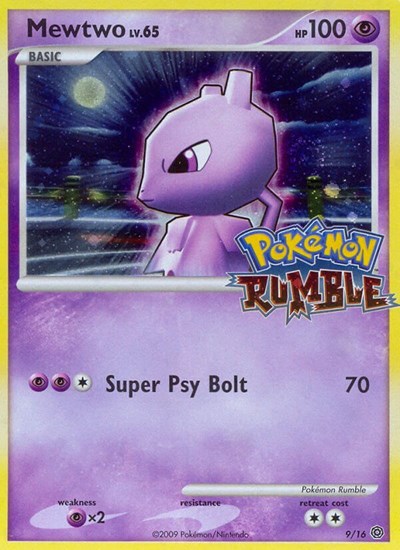
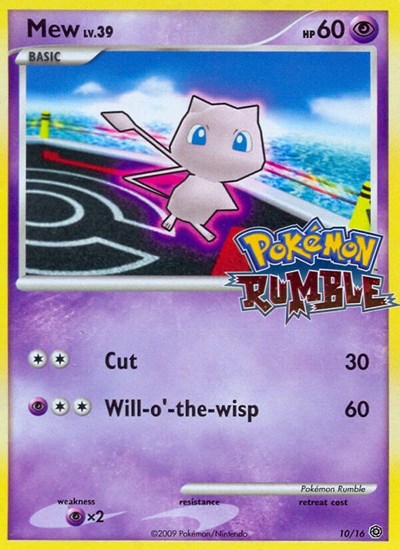
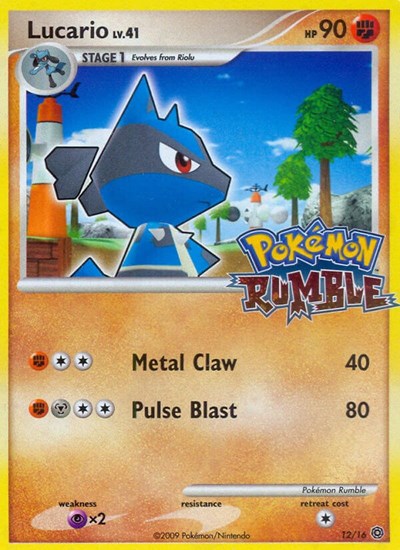
- The top card in the set, ahead of names like Mewtwo, Lucario, and Mew
- Clean master-set target with a short, fixed supply and no reprints
Collector's readWhat it means for your master set
Set landscapeWhere this card sits in Rumble
VariantsCard variants
Holofoil 7/16 · $750.00 — the only variant this card was printed in (no reverse holo or special pattern), so a master set needs just this one copy.
The storyThe mascot card from a 16-card oddity
Pokemon Rumble is a strange little release. The 16-card English collection came out in December 2009, bundled with the WiiWare game of the same name. The cards skip the usual TCG furniture. No Pokedex entries, no Poke-Powers or Poke-Bodies, no rarity symbol on the card face. Every card credits "Pokemon Rumble" in the illustrator box instead of a named artist, because the art is lifted straight from the game's toy-figure look.
“Card 7 of a fixed 16-card promo set bundled with the 2009 WiiWare game”
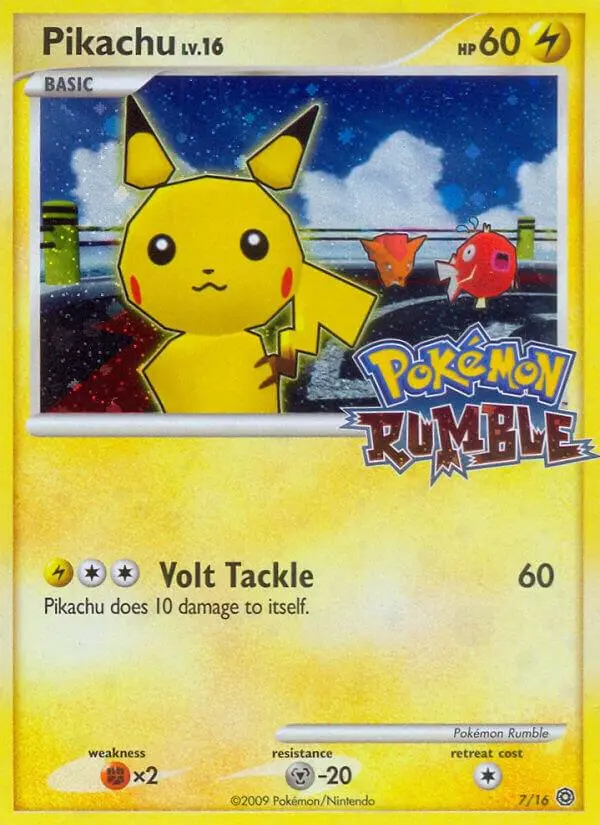
Pikachu is card 7 of 16, a Lightning-type holo. It carries the same wind-up-toy aesthetic as the rest of the set, the slightly off proportions that make these cards instantly recognizable. For master-set builders this is one of the cleaner small targets out there. Sixteen cards total, all from one short print window, so the finish line is visible from the start. The trick is condition, and the fact that the mascot is the one everyone wants.
That demand mismatch is the whole story. Plenty of the Rumble cards are cheap and easy. Pikachu is not. It pulls collector dollars that the commons in the set never see, which makes it the card that gates a full Rumble run more than any other.
By the numbersMarket analysis
Pikachu sits at or near the top of the Rumble set, trading alongside the other standouts like Mewtwo, Lucario, and Mew. Raw played-to-decent copies are accessible by chase-card standards, with clean and graded examples climbing well above that.
Pricing has been steady rather than explosive. This is a small, fixed-supply promo set with no reprints, so values drift with general Pikachu demand more than with set hype. Clean copies hold better than the rest of the set because the mascot has a buyer pool well beyond Rumble completists.
A sensible long-term hold rather than a flip. The supply is fixed and the mascot keeps cross-collector interest alive, but this was never a high-print mainstream set, so liquidity is thinner than a modern chase. Buy the nicest copy you can and treat it as a set anchor.
Graded copies carry a real premium over raw, because surface and edge wear on these 2009 holos is common and a verified high grade is scarce. Gem-grade examples can multiply the raw price, while mid grades close the gap with clean raw copies.
There is no booster pull rate to quote here. Rumble was not a randomized booster product. The 16-card collection shipped as a fixed set bundled with the WiiWare game, so you got the cards together rather than chasing one through packs. That makes scarcity a function of how many copies were distributed and how many survived in clean shape, not pack odds. For Pikachu specifically, supply is fixed and demand outruns it, which is why it sits at the top of the set.
Compared to a randomized chase like a modern Special Illustration Rare, where a specific card can hide behind hundreds of packs, the Rumble Pikachu is easy to find for sale. The scarcity here is age and condition driven. Fifteen-plus years of handling means clean copies are the real bottleneck, not finding one at all.
ArtworkWhy the art matters

There is no individual illustrator credited on this card. Every card in the Rumble collection prints "Pokemon Rumble" in the illustrator box instead of an artist name. The art is taken from the WiiWare game's visual style, so the credit points at the game and its production team rather than a single painter. Do not expect a Mitsuhiro Arita or Masakazu Fukuda signature here. That is not how this set works.
Pikachu appears in the game's wind-up toy form, the stubby, rounded figure look that defines Rumble, complete with the detached-style ears the set uses. Magikarp and Vulpix sit in the background in the same toy aesthetic. The proportions are deliberately off, with an oversized head and the simplified shapes that run across the whole set. It is the same cheerful, slightly stiff look from the game, dropped onto a holo card with a plain frame and no rarity symbol.
Standard holofoil treatment on a card that omits the usual rarity symbol and Pokedex text. The layout is stripped down compared to a normal-era card of the period. Number reads 7/16. The holo sits across the card in the standard pre-2010 pattern rather than a textured or modern foil.
It is the mascot rendered in a one-off art style that never got reused at scale. Pikachu plus a visual treatment unique to a single small set is what keeps it at the top of Rumble and on master-set want lists.
BackgroundAbout Pikachu
Pikachu has anchored Pokemon since the franchise launched in the 1990s and has appeared on more cards than any other Pokemon. That ubiquity cuts both ways for collectors. Most Pikachu cards are common, but the ones tied to short promo runs or unusual art, like this Rumble printing, separate themselves quickly because there is a permanent built-in audience for any Pikachu that is genuinely scarce.
- ›Mascot status guarantees demand across every era and set
- ›The Rumble toy-figure art is unlike any other Pikachu card
- ›Promo-only distribution tied to a discontinued WiiWare game
- ›Small fixed-supply set makes the card a clear collector target
- ›Headlines the 2009 Pokemon Rumble WiiWare game this set was built around
- ›The top card in the 16-card Rumble collection on value
Own it wellCollector guide
These 2009 holos commonly show edge whitening, surface scratches, and print-line wear on the foil. Check the corners and the holo surface under angled light. The plain frame means edge wear shows up fast against the border. Centering varies on the run, so inspect it before paying a clean-copy premium.
Worth grading if you have a genuinely clean copy, since high grades are scarce and carry a real premium. For an average played copy, a raw card slabbed in a penny sleeve and toploader is fine for a set binder. Grade for value, not for protection. Read the grading guide →
Sleeve and toploader at minimum for any holo of this age. For long-term holds, a graded slab or a sealed semi-rigid with a sleeve keeps the foil surface from picking up new scratches. Keep it out of direct light and away from humidity. See the storage guide →
Buy the best surface you can afford. The condition spread is wide on this card and holo wear is the main value driver. For raw purchases, ask for clear angled-light photos of the foil. For serious money, buy graded from a reputable seller so you are not paying a gem price for a mid card. See the singles buying guide →
Rumble is not a heavily counterfeited set the way Gold Stars or vintage Charizards are, but verify the basics anyway. Confirm the stripped-down layout with no rarity symbol and the "Pokemon Rumble" illustrator credit, check that the holo pattern matches the period, and inspect the back swirl gradient. If you are spending real money, a graded copy removes the guesswork.
Protect your card
High Chase Score — protect and consider grading. · Amazon affiliate links · Storage guideWord on the streetCommunity sentiment
Collectors treat Rumble as a fun, low-stakes set with a few standout cards. Pikachu gets most of the attention, with Mewtwo, Lucario, and Mew rounding out the heavy hitters and the rest seen as filler. The toy-figure art is divisive. Some love the oddball look, others find it goofy, but nobody confuses a Rumble card for anything else, and that distinctiveness is part of why the mascot holds value.
Steady niche interest rather than hype. Discussion tends to come up around master-set completion threads and weird-old-promo-set roundups rather than price-spike chatter. The appeal is durability, not momentum.
Good to knowFrequently asked questions
Keep collectingRelated cards


Plan your Other Rumble master set
Track every card, see what you're missing, and lay out your binder page by page.